


Three Microsoft support deadlines hit in October. One move clears all of them.
On October 14, 2026, Exchange Server 2016 and 2019 run out of their final security updates, Office 2021 support is over, and Windows 10's first ESU year has expired. You can pay rising rent three times over to stand still, or make one migration to a stack that stays current on its own. ABT does the migration free when your licensing comes with us.
- Free migration and conversion planning with a licensing commitment through ABT
- Exchange to Exchange Online, Office 2021 to Microsoft 365 Apps, Windows 10 to Windows 11 or Windows 365
- Windows 365 even includes Windows 10 ESU at no extra cost while you finish the rollout
- Exchange 2016/2019: final ESU window closed, no further extension
- Office 2021: support ended October 13, no ESU exists
- Windows 10: ESU Year 1 expired, Year 2 doubles to $122 per device
What ends on October 14, 2026?
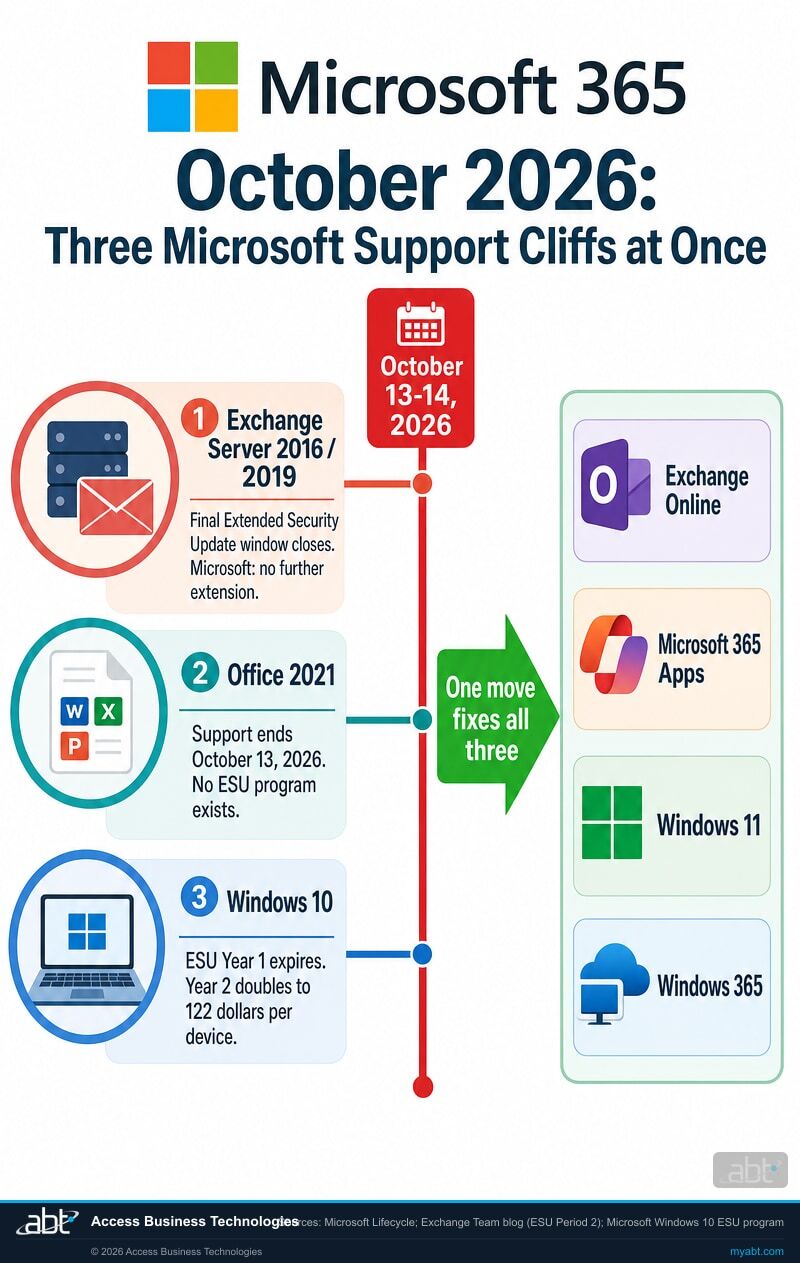
On October 14, 2026, three separate Microsoft support lifelines are gone at once: the final Extended Security Update window for Exchange Server 2016 and 2019, all support for Office 2021, and the first year of Windows 10 Extended Security Updates. Each date was set independently, but they land in the same October week, which means an organization running all three faces one combined exposure event, not three small ones.
The Exchange deadline is the sharpest. Exchange Server 2016 and 2019 officially left support on October 14, 2025. Microsoft granted two paid Extended Security Update periods, and the second ends with October 2026. Microsoft's Exchange team put it in writing: "There will be no further extension of Exchange 2016/2019 ESU program timeline. Once October 2026 ends, there will be no further updates for Exchange 2016/2019, even if you currently have a Period 2 ESU." An internet-facing mail server that can never be patched again is not a maintenance item. It is an incident waiting for a CVE number.
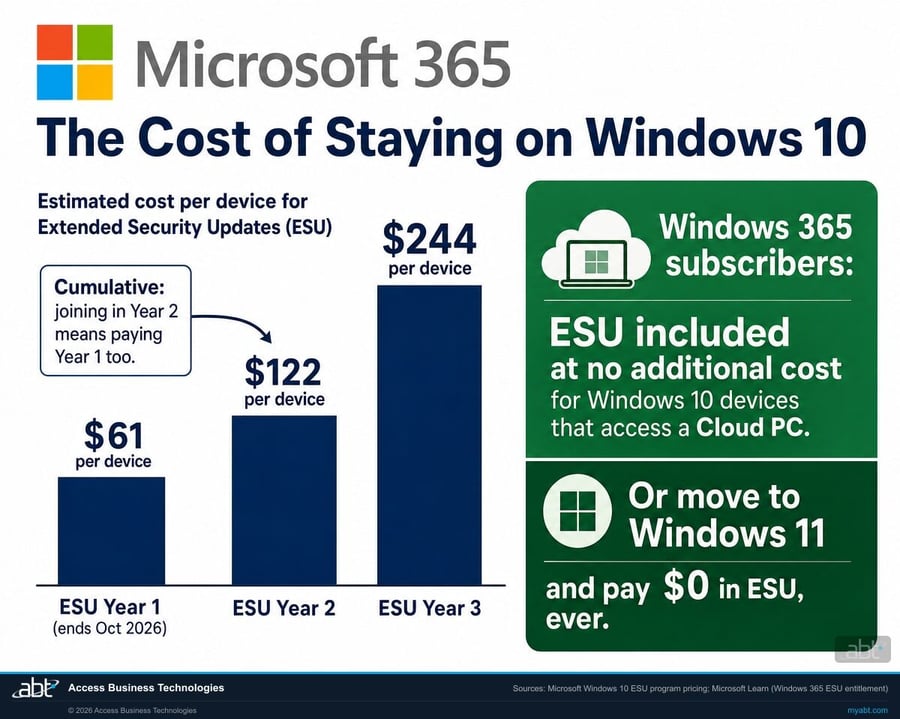
Office 2021 is quieter but has no safety valve at all: support ends October 13, 2026, and unlike Windows and Exchange, no extended security update program exists for it. Windows 10 has the treadmill problem instead. ESU Year 1 coverage runs out on October 13, 2026, the consumer program ends entirely, and commercial Year 2 doubles the price to $122 per device. The pricing is cumulative by design, so waiting gets more expensive every year.
Exchange Server 2016/2019
Support ended in 2025; the paid ESU bridge ends now, and Microsoft says there is no further extension. Your realistic paths: Exchange Online through a migration, or Exchange Server SE on-premises, which Microsoft describes as an in-place upgrade from 2019.
Office 2021
No security updates, no bug fixes, no support calls, and no ESU program exists for perpetual Office. The apps keep opening, and every newly discovered vulnerability stays open with them. The move is Microsoft 365 Apps, which never has an end-of-support date.
Windows 10
The consumer ESU program ends entirely. Commercial Year 2 costs $122 per device, cumulative with Year 1's $61, and Year 3 doubles again to $244. The exits: Windows 11 on capable hardware, or a Windows 365 Cloud PC, which includes ESU for the Windows 10 device at no extra cost.
Why fix all three with one move?
Because the alternative is paying rising rent on standing still. Extended security updates buy time, not progress, and each renewal costs more for the same aging systems.
| Pay to stand still | Move once with ABT | |
|---|---|---|
| Exchange 2016/2019 | No option remains. Microsoft states there is no further ESU extension after October 2026, at any price. | Migrate to Exchange Online inside Microsoft 365. Patching, spam filtering, and high availability become Microsoft's job, managed by ABT in your tenant. |
| Office 2021 | No ESU program exists. Running it past October 13, 2026 means unpatched Word, Excel, and Outlook opening files from the internet. | Microsoft 365 Apps, always current, licensed per user instead of per device, and covered by the same plan that carries your email. |
| Windows 10 | ESU Year 2 at $122 per device, cumulative with Year 1. Year 3 doubles again to $244. Three years of ESU costs $427 per device and ends anyway. | Windows 11 where hardware allows; Windows 365 Cloud PCs where it does not, with Windows 10 ESU included at no extra cost during the transition. |
| Budget shape | Three separate emergency line items that grow every renewal and still end in a forced migration later, on worse terms. | One planned project, one licensing relationship, and ABT's migration work is free with a licensing commitment. |
| Security posture | Unsupported software accumulates known, unpatchable vulnerabilities from the first missed Patch Tuesday. | A currently supported stack that receives fixes the day Microsoft ships them, hardened by ABT during onboarding. |
Get your October 14 exposure list
Tell ABT what you run and we will map exactly which of the three deadlines touch your environment, what each path costs, and what the one-move plan looks like on your calendar. Written plan, no obligation.
What does the one move actually look like?
The one move is a coordinated migration to the current Microsoft stack: mail to Exchange Online, desktop apps to Microsoft 365 Apps, and endpoints to Windows 11 or Windows 365. Each piece replaces a product that is out of support with one that never goes out of support, because the cloud services are updated continuously instead of on a lifecycle clock.
ABT sequences it so the deadlines stop mattering. Mail moves first when Exchange is in scope, because that is the deadline with no fallback. Microsoft 365 Apps roll out alongside, replacing Office 2021 seat by seat under per-user licensing. Endpoints move last and most flexibly: hardware that supports Windows 11 gets upgraded in place, and hardware that does not gets a Windows 365 Cloud PC, which keeps the old device useful and includes Windows 10 ESU at no extra cost while the rollout finishes. Nobody buys a $122 ESU seat as a panic purchase in November.
For credit unions, banks, and mortgage companies, the move also resets the exam conversation. Unsupported software is a finding waiting to be written; a managed Microsoft 365 tenant with current endpoints is documentation your examiner has seen before. ABT manages Microsoft 365 tenants for 750+ financial institutions, and if a workload genuinely must stay on a server, ABT hosts Azure environments for exactly that case. Watch the short on the right for why network controls make or break a clean migration, then bring us your inventory.
Migration on us. Licensing with us.
The migration work is free when your Microsoft licensing comes through ABT. One project clears all three deadlines, and the licensing that follows is the licensing you were going to need anyway.
ABT plans and runs the migration. You commit to your Microsoft licensing through ABT.
- The exposure map first. A written inventory of where the three deadlines touch your environment: every Exchange server, every Office 2021 install, every Windows 10 device, with the recommended path for each.
- Mail migration to Exchange Online, sequenced ahead of the deadline that has no fallback, with mail flow, spam filtering, and mobile access verified before anything is retired.
- Microsoft 365 Apps rollout replacing Office 2021, plus the Windows 11 upgrade wave and Windows 365 Cloud PCs for hardware that cannot make the jump, with the included Windows 10 ESU covering stragglers during the transition.
- A managed tenant afterward. ABT manages your Microsoft 365 tenant as a Tier 1 Cloud Solution Provider: licensing right-sized yearly, security baseline maintained, and a named team on the phone.
The commitment covers your Microsoft licensing through ABT; scope and term are set in your written plan before you sign anything. Complex server workloads that must stay on-premises are scoped honestly, including the Exchange Server SE path where it genuinely fits. As of mid-August 2026, the window to run this as a planned project instead of an emergency is about nine weeks.
ABT also operates M365 Guardian, its managed security service for credit unions, banks, and mortgage companies.
Related reading
Cloud Migration Without the Headaches
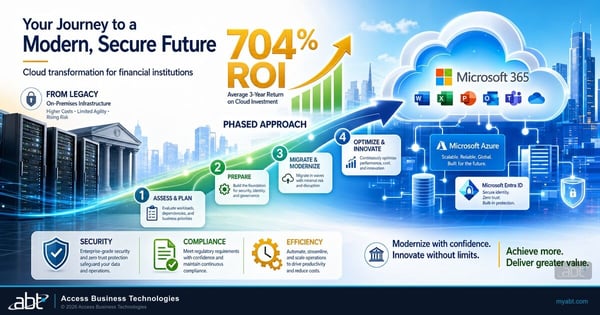
The phased approach ABT uses to move financial institutions to Microsoft 365 without breaking daily operations.
Tenant-to-Tenant Migration for Mergers
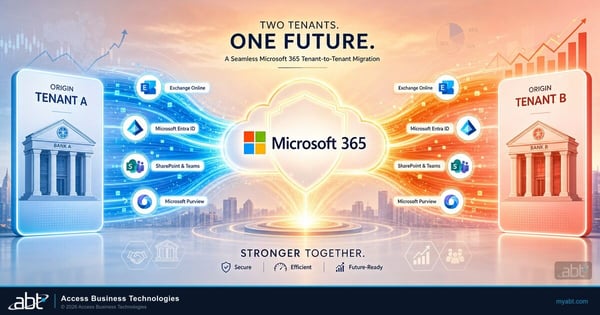
What it takes to consolidate Microsoft 365 tenants cleanly, and why sequencing decides whether users feel it.

The Integration Challenges Nobody Warns You About
Core systems, legacy apps, and the real reasons bank migrations slip, with the mitigations that keep them on schedule.
The October deadline, answered
Nine weeks is
still a plan.
Tell us what you run on Exchange 2016/2019, Office 2021, and Windows 10. ABT will map your October 14 exposure and send back the one-move plan, free, in writing, within one business day.
