

In This Article
- What a Modern Mortgage POS Actually Does
- Five Features That Cut Pre-Qualification From Days to Minutes
- AUS Integration: The Speed Multiplier
- MortgageExchange: The POS to LOS to Core Spine
- Microsoft 365 Copilot Business for Pre-Qual Document Review
- M365 Guardian: Keeping Pre-Qual AI Audit-Ready
- Agentic AI Market Context
- ROI Framework: Measuring POS Impact
- Technical Reference
- Frequently Asked Questions
The phrase "weeks to minutes" is real, but most of the weeks do not live where buyers think they do. Banks, credit unions, and mortgage companies usually look first at the Point-of-Sale interface when pre-qualification feels slow. The POS is the front door, and a modern POS does help. The actual weeks, though, come from the seams between the POS, the loan origination system, and the core. A borrower fills out the application in minutes. The data then sits at the LOS-to-core handoff until someone manually re-keys it, and that handoff is where the days disappear.
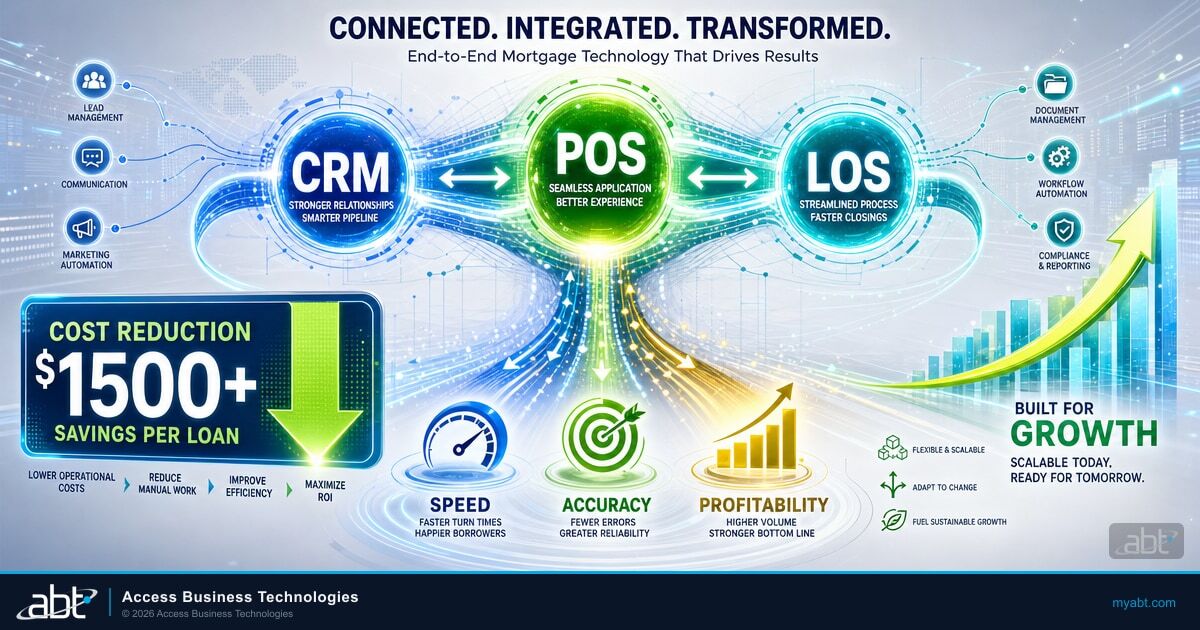
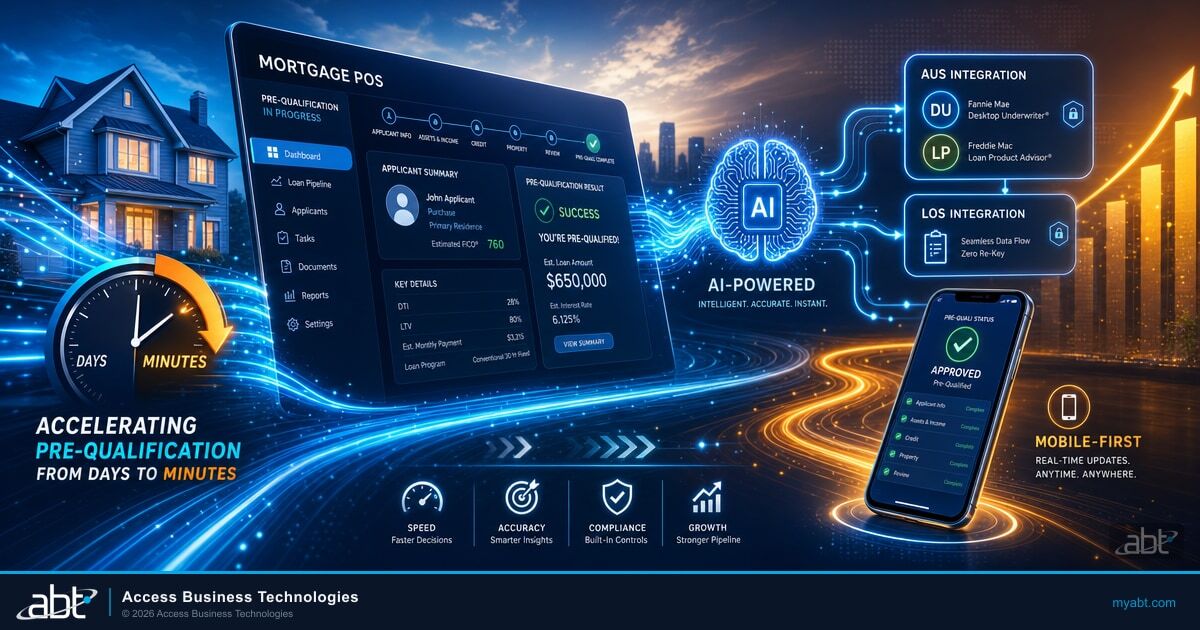
The institutions that pull pre-qualification from days to minutes do two things together. They modernize the POS so the borrower experience is fast and the data is validated at intake. They also fix the integration spine so verified borrower data flows from the POS through the LOS into the core in real time, with no manual re-entry. ABT MortgageExchange is the integration spine most ABT customers use for that flow, and Microsoft 365 Copilot Business is the AI assist that gives the loan officer or processor a verified summary of the file inside the same Microsoft 365 tenant the institution already runs.
The mortgage POS software market hit $1.14 billion in 2026, on pace for $2.31 billion by 2032 at a 12.3 percent compound annual growth rate. Vendor capability is real and growing. What this guide covers is how to make that capability translate into actual pipeline speed for an institution running Encompass, Calyx Path, or MeridianLink against FIS Horizon, Jack Henry SilverLake, Fiserv Premier, Fiserv DNA, Symitar, or Corelation KeyStone. The POS is the front door. ABT MortgageExchange is the spine. Microsoft 365 Copilot is the AI assist. M365 Guardian keeps all of it audit-ready.
What a Modern Mortgage POS Actually Does
A mortgage Point-of-Sale system is the borrower-facing application portal where the loan journey begins. Traditional versions were digital paper forms. Modern POS interfaces are active processing engines that verify data, pull credit, and push files to underwriting before the borrower closes the browser tab.
The difference matters. A static form collects information. An intelligent POS interface validates it, cross-references it against third-party data sources, and routes it into the Loan Origination System in real time. That gap between collect and process is where days disappear from your pipeline, but only if the routing actually completes without a human typing the same data into a second system on the back end.
For banks, credit unions, and mortgage companies running ICE Encompass, Calyx Path, or MeridianLink, the speed of pre-qualification depends less on which POS vendor an institution picks and more on how cleanly the POS data flows into the LOS and then to the core. The POS vendor controls the borrower experience. The institution controls the integration spine. ABT MortgageExchange is the integration spine most ABT customers use, and the rest of this guide describes how the POS, LOS, core, and Microsoft 365 surfaces fit together when that spine is in place.
Five Features That Cut Pre-Qualification From Days to Minutes
Automated Data Verification
Modern POS platforms connect directly to credit bureaus, employment verification services, and asset verification providers. When a borrower enters their information, the system pulls and validates data in the background. No manual re-keying. No waiting for a processor to call an employer.
Platforms like Plaid, Argyle, and Truv provide real-time income and asset verification through consumer-permissioned data. This replaces the old method of uploading pay stubs and waiting for manual review. The validated data still has to land in the LOS without a human re-typing it, which is why the POS-to-LOS connection matters as much as the verification source itself.
Intelligent Document Capture and Microsoft 365 Copilot Business Review
Optical Character Recognition paired with AI reads uploaded documents, extracts key fields, and flags missing information on the spot. Borrowers get instant feedback instead of a phone call three days later asking for page two of their bank statement. AI-powered document processing now handles over 700 document types with 97.8 percent classification accuracy in peer-reviewed mortgage-specific evaluations.
The processing that follows OCR is where Microsoft 365 Copilot Business carries the weight inside an ABT customer's tenant. Copilot reads the 1003 application, the income documentation, the asset statements, and the credit report inside the Microsoft 365 boundary, drafts the pre-qualification summary for the loan officer, flags income or asset inconsistencies, and stages the borrower communication for review. No copy-paste to a consumer AI tool. No data leaving the institution's Microsoft 365 tenant. Our companion article on how Microsoft AI is rewriting the rules of mortgage underwriting covers the same Copilot pattern at the underwriting stage.
Real-Time Status Tracking
Borrowers expect the same transparency they get from package tracking. Modern POS platforms provide a centralized hub with automated notifications via email, text, or push notification. Every milestone triggers an update. Every missing item generates a specific request. The status events that drive those notifications are most useful when they also flow into the LOS pipeline view, so loan officers and processors see the same milestones the borrower sees rather than working from a separate screen.
Mobile-First Architecture
Sixty percent of borrowers engage in mortgage activities from mobile devices. A POS that does not work on a phone is not a POS. Leading platforms let borrowers start on desktop during lunch and finish on mobile from the couch, with full state preservation across devices. The state preservation is the architectural test, not the layout.
Dual AUS Submission
The fastest POS platforms now run both Fannie Mae's Desktop Underwriter and Freddie Mac's Loan Product Advisor at the point of application. Loan officers compare findings side by side and select the best outcome for each borrower without running separate submissions. The AUS findings then need to flow back into the LOS, and from the LOS into the core at boarding, without anyone re-keying the loan amount or interest rate at either handoff.

AUS Integration: The Mortgage POS Speed Multiplier
The single biggest accelerator in pre-qualification is direct AUS connectivity. Once the POS collects and verifies borrower data, it submits to an Automated Underwriting System and returns a decision in minutes.
This is where the weeks-to-minutes transformation lands at intake. Manual pre-qualification requires a loan officer to review the file, a processor to verify documents, and an underwriter to assess risk. AUS integration compresses those steps into a single automated workflow. Research from the Federal Reserve Bank of New York shows fintech lenders close mortgages 20 percent faster than traditional lenders with lower default rates, and the speed comes from automation, not from shortcuts.
For your operations team, AUS integration means loan officers spend time building relationships instead of chasing documents. Processors handle exceptions, not routine verifications. Underwriters focus on complex files, not checkbox reviews. The gain at boarding is parallel: when the AUS findings, the loan terms, and the borrower data flow from the LOS to the core with mortgage-aware event handling, the servicing team starts payment three days earlier instead of waiting for the boarding exception register to clear.
MortgageExchange: The POS to LOS to Core Spine
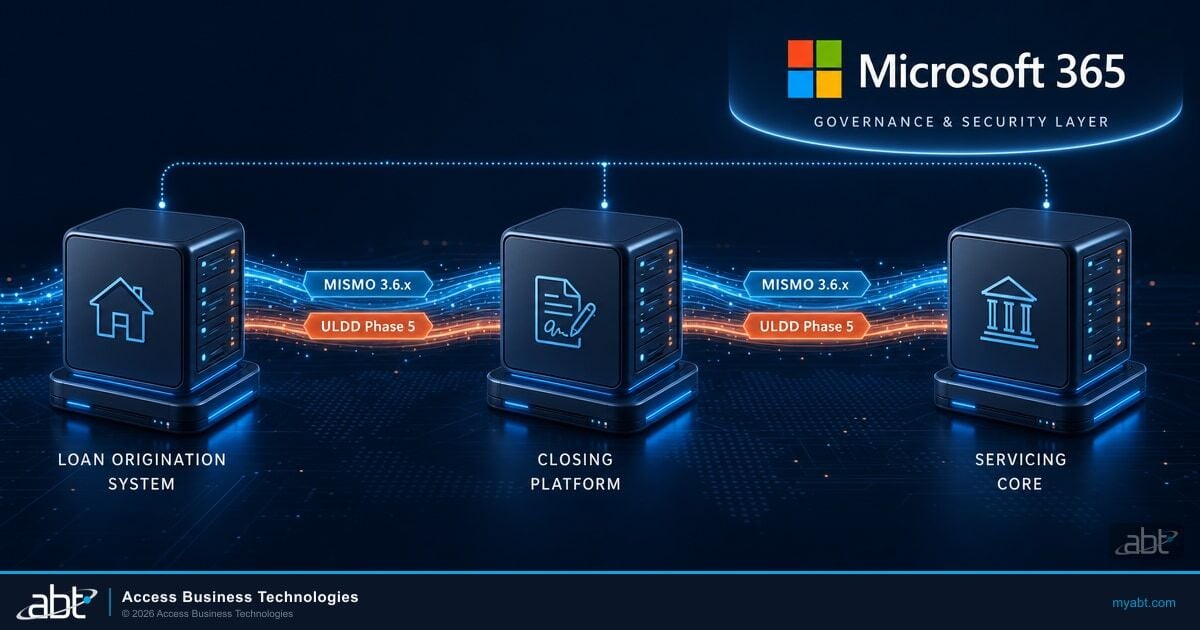
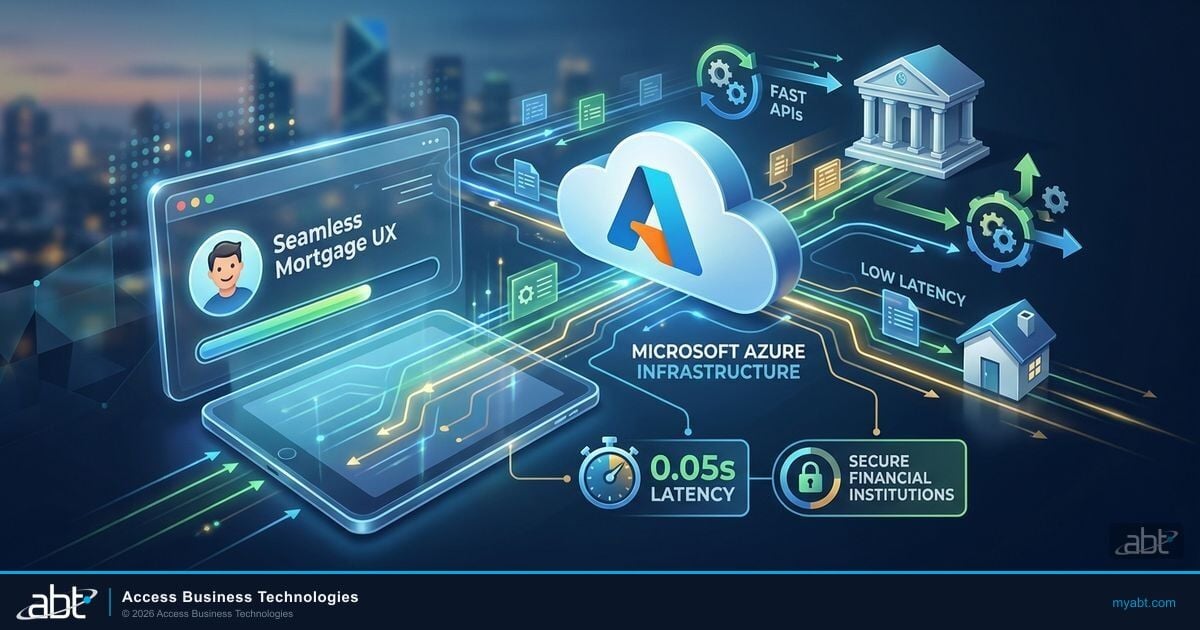
POS modernization is half the answer. The other half is the integration spine that carries verified borrower data from the POS into the LOS, and from the LOS into the core, without anyone typing the same field into a second system. ABT MortgageExchange is the mortgage-aware integration platform most ABT customers use for that spine.
| System Layer | What Flows Through MortgageExchange | Common Platforms Connected |
|---|---|---|
| Point-of-Sale | Borrower application data, verified income and asset feeds, dual AUS findings, document upload metadata, status events. | Encompass Consumer Connect, MeridianLink Mortgage Access, Calyx Path borrower portal, third-party POS platforms with API connectivity. |
| Loan Origination System | Pre-qualification decisions, conditions, disclosures, AUS findings, underwriting decisions, closing package events. | ICE Encompass, MeridianLink Mortgage, Mortgage Cadence, Dark Matter Technologies Empower, Calyx PointCentral. |
| Core Banking System | Boarded loan record, payment posting, escrow analysis events, general ledger entries, statement triggers, customer or member relationship updates. | FIS Horizon, Jack Henry SilverLake, Fiserv Premier, Fiserv DNA, Symitar, Corelation KeyStone. |
| Audit and Reporting | Event log of every cross-system handoff, tamper-evident retention, evidence packages tied to FFIEC, OCC, and NCUA examiner expectations. | Microsoft Fabric data lake, Microsoft Power BI dashboards, Microsoft Purview retention and audit policies. |
The mortgage-aware piece matters. Generic middleware platforms route messages between systems, but every mortgage-specific data mapping has to be built and maintained inside the platform. MortgageExchange ships with pre-built connectors and event handling for the LOS, core, and servicing systems most ABT customers actually run, with the boarding event, the escrow analysis event, the payment posting event, and the payoff event all mapping to mortgage-aware schemas rather than being reconstructed by the institution. Audit evidence collection runs by default.
For a bank or credit union running Encompass against FIS Horizon, or MeridianLink Mortgage against Symitar, MortgageExchange handles the LOS-to-core boarding feed with mortgage-specific event handling that generic middleware would otherwise force the institution to build. Our companion article on tracking your mortgage pipeline across the LOS, core, servicing, and BI surfaces walks through the integration pattern at the pipeline visibility layer.
Access Business Technologies manages Microsoft 365 tenants and hosts Microsoft Azure environments for 750 financial institutions, including community banks, credit unions, and mortgage companies. The pattern across that footprint is consistent. The institutions that compress pre-qualification from weeks to minutes do not just modernize the POS. They pair a modern POS with ABT MortgageExchange for the LOS-to-core spine and Microsoft 365 Copilot Business for the AI assist, all inside their existing Microsoft 365 tenant. Boarding accuracy improves because the LOS-to-core feed is mortgage-aware. Pre-qual throughput improves because Copilot reviews the file inside the M365 boundary instead of borrower data being copy-pasted into a consumer AI tool. Audit evidence improves because Microsoft Purview is retaining the right fields at the right cadence by default.
The boarding-accuracy point deserves emphasis. A loan boarded to the core with an incorrect interest rate becomes a servicing exception that examiners trace back to the boarding feed. Banks and credit unions that retain servicing for portfolio loans absorb the cost directly. Mortgage companies that sell servicing released still defend the post-funding delivery accuracy against repurchase requests from investors. MortgageExchange handles the LOS-to-core boarding feed with event-aware mapping, so the loan amount, the rate, the term, the borrower of record, and the escrow setup land in the core the way the LOS said they should. The institutions that build that handoff out of point-to-point feeds end up debugging it for the life of the relationship.
Microsoft 365 Copilot Business for Pre-Qual Document Review
The borrower experience compresses at the POS. The data flow compresses at MortgageExchange. The pre-qualification decision compresses inside Microsoft 365 Copilot Business, which is where the loan officer or processor actually reviews the file. Copilot lives inside the institution's Microsoft 365 tenant, governed by the same Microsoft Entra ID Conditional Access policies and Microsoft Purview data protection rules that already cover the rest of the M365 footprint. ABT manages the tenant. The institution owns the data. Copilot reads only what the tenant grants it access to read.
In a pre-qualification workflow, Copilot opens the 1003 application from the LOS or document management surface, opens the income and asset statements, opens the credit report, and produces a structured pre-qual summary for the loan officer: borrower identity confirmed against the application, employer and income consistency confirmed against verification feeds, asset position confirmed against the statements, dual AUS findings extracted with the recommended outcome highlighted, and any flagged inconsistencies surfaced for review. The loan officer reviews the summary, accepts or overrides each finding, and approves the pre-qualification.
Key Takeaway
Copilot is not the underwriter. Copilot is the loan officer's review assistant. Every pre-qualification decision is still made by a human with the file in front of them. The architectural difference is that the human is reviewing a structured summary instead of assembling one from five different screens, and the institution can prove with audit evidence what Copilot read, what it summarized, and what the loan officer decided.
The tenant-locked nature of Copilot is the part that matters for regulators. Borrower data, including the loan applicant's NPI (Social Security number, income data, credit score, loan amount), never leaves the institution's Microsoft 365 boundary. The pre-qualification summary Copilot drafts lives in the institution's Microsoft 365 tenant. The borrower communication Copilot stages is held for review inside Outlook or Teams before any send. Banks, credit unions, and mortgage companies retain full ownership of the data and full visibility into Copilot's actions through Microsoft 365 audit logging.
For institutions running Microsoft 365 Copilot Business or Microsoft 365 Copilot in the Business Premium tier, the pre-qualification workflow described above is the same pattern. The licensing tier governs whether the institution can scale Copilot to every loan officer or processor versus a smaller pilot. The architecture is the same. The audit trail is the same. The tenant boundary is the same.
M365 Guardian: Keeping Pre-Qual AI Audit-Ready
Pre-qualification speed without governance is liability with a faster delivery mechanism. The Microsoft 365 stack described above is the baseline. M365 Guardian is the operating model ABT runs on top of it for the lending workflows specifically. The Guardian layer for a pre-qualification pipeline includes Microsoft Purview DLP policies calibrated to loan applicant NPI flowing through the POS, the LOS, MortgageExchange, and the core. It includes Microsoft Sentinel analytics rules tuned to integration-plane anomalies, including ABT MortgageExchange feed latency thresholds and unusual borrower-data access patterns. It includes Microsoft Purview retention and audit policies aligned to FFIEC IT Examination Handbook expectations, OCC Bulletin 2023-17 third-party risk management guidance, and NCUA Letter 07-CU-13 third-party relationship due-diligence expectations, with tamper-evident audit trails set the same way across every customer tenant. And it includes the 24/7 monitoring of those Sentinel and Defender signals, so an integration feed that silently fails at 2 a.m. is caught before the next morning's pre-qualification queue runs against stale data. Banks, credit unions, and mortgage companies keep their Microsoft 365 licensing and retain their tenant ownership. The Guardian layer is added through ABT's partner relationship. Our companion article on staying audit-ready when running Encompass and Calyx covers the documentation pattern in detail.
Agentic AI Market Context
The 2026 POS market has moved beyond basic automation into agentic AI. In February 2026, Bevri launched an agentic AI-powered Point-of-Sale platform for NEXA Lending, the nation's largest mortgage brokerage. The system completes the 1003 application with the borrower, calculates and validates income and assets, runs dual AUS findings, and maps underwriting conditions to document requirements. Vendors including TidalWave and Zeitro have published comparable agentic capability claims. LenderLogix has published an evaluation framework for AI-powered POS claims that mortgage ops teams should review before any vendor demo.
The vendor agentic AI story is the market backdrop. The institution-side story is different. For an institution already standardized on Microsoft 365, the marginal cost of adding agentic capability to existing lending workflows through Microsoft 365 Copilot Business, Microsoft Copilot Studio, and Microsoft Power Automate is significantly lower than buying and integrating a third-party agentic POS, and the audit posture is cleaner because every agentic action runs inside the institution's existing tenant boundary. Vendor agentic AI is real and useful. So is the agentic capability already sitting inside Microsoft 365 for the institutions that own a tenant they trust.
ROI Framework: Measuring POS Impact
Track these metrics before and after POS plus integration plus Copilot deployment to quantify the return:
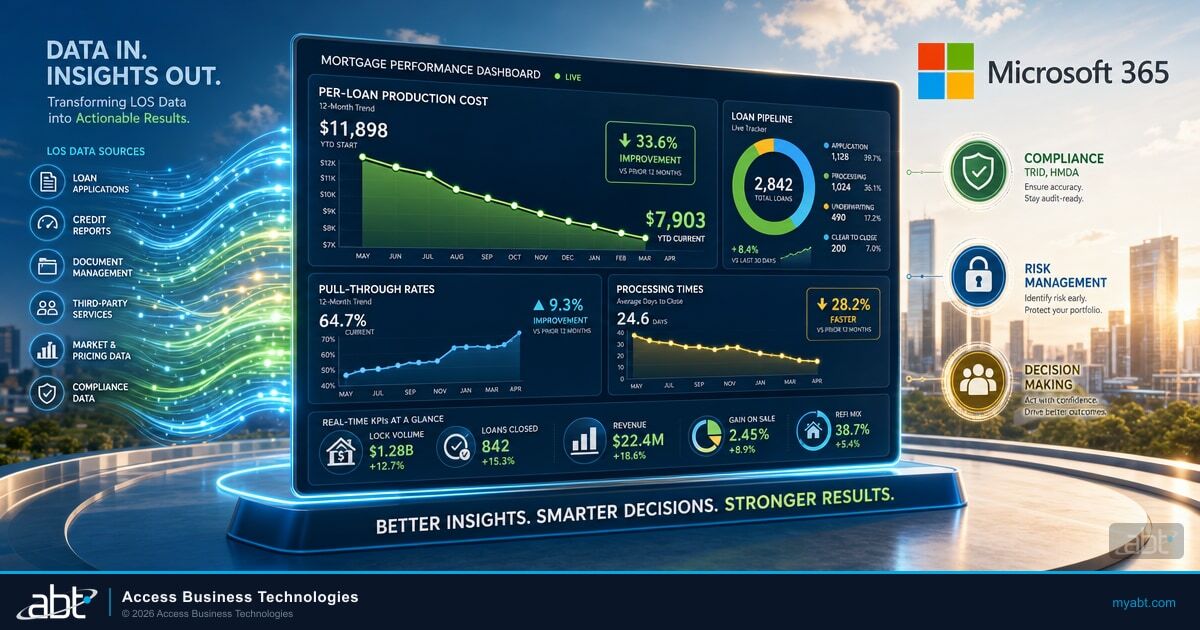
- Application-to-pre-qualification time: Measure the hours or days from submission to decision. Modern POS plus MortgageExchange plus Copilot review cuts this from 3-5 days to under 30 minutes for AUS-eligible files.
- Application abandonment rate: Industry average is 75-80 percent. Mobile-optimized POS combined with real-time verification reduces abandonment by 25-40 percent.
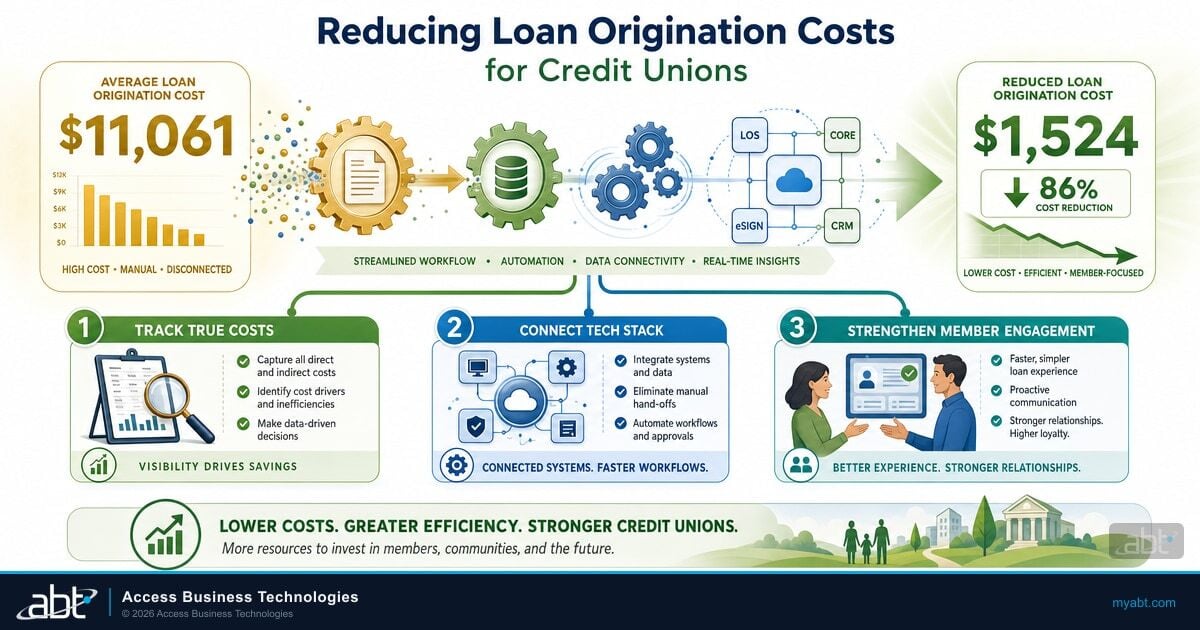
- Manual touches per loan: Count every time a human re-enters or verifies data. Target: reduce by 60 percent or more. Most of the gain comes from the LOS-to-core feed, not the POS itself.
- Loan officer capacity: Measure loans per LO per month. Vendor benchmarks indicate 2.5x faster pre-qualifications and 7-plus hours saved per file when POS automation, AUS integration, and Copilot review run together.
- Compliance error rate: Manual processes show 10-15 percent defect rates. Automation plus mortgage-aware integration plus Microsoft Purview governance brings this below 3 percent in practice.
- Boarding accuracy: Count post-boarding servicing exceptions per 100 loans. Mortgage-aware integration through MortgageExchange materially reduces the exception rate compared to point-to-point or generic middleware approaches.
Run these numbers against your current baseline. The ROI case usually pays for itself within the first quarter of deployment, but the durable gain comes from the boarding accuracy and the audit posture, not from the borrower-facing speed alone.

Technical Reference
- Mortgage POS (Point-of-Sale): Borrower-facing application interface that collects, verifies, and routes loan data into origination systems.
- AUS (Automated Underwriting System): Fannie Mae's DU and Freddie Mac's LPA. Algorithmic engines that evaluate borrower risk and return approve, refer, or deny decisions.
- OCR (Optical Character Recognition): AI technology that reads scanned documents and extracts structured data fields.
- Agentic AI: Autonomous AI systems that execute multi-step workflows, make context-aware decisions, and resolve exceptions without human intervention.
- API-first architecture: System design pattern where all functionality is exposed through standardized Application Programming Interfaces, enabling real-time integration between platforms.
- ABT MortgageExchange: Mortgage-aware integration platform with pre-built connectors for ICE Encompass, MeridianLink Mortgage, Mortgage Cadence, Dark Matter Empower, Calyx PointCentral against FIS Horizon, Jack Henry SilverLake, Fiserv Premier, Fiserv DNA, Symitar, and Corelation KeyStone. Runs on Microsoft Azure, monitored and supported by ABT, audit evidence collected by default.
- Microsoft 365 Copilot Business: Microsoft's tenant-locked AI assistant for small and mid-sized businesses, including community banks, credit unions, and mortgage companies. Reads borrower data inside the institution's M365 boundary, governed by Microsoft Entra ID Conditional Access and Microsoft Purview policies. No data leaves the tenant.
- M365 Guardian: ABT's operating model layered on top of Microsoft 365 for financial institutions. Includes Microsoft Purview DLP and retention policies, Microsoft Sentinel analytics rules tuned to lending workflows, and 24/7 monitoring of integration-plane signals.
Ready to put MortgageExchange and Microsoft 365 Copilot to work on pre-qualification?
ABT helps banks, credit unions, and mortgage companies pull pre-qualification from weeks to minutes by pairing modern POS interfaces with the MortgageExchange spine and Microsoft 365 Copilot Business inside the institution's own tenant. Boarding accuracy, audit evidence, and AI governance come standard.
Frequently Asked Questions
Modern POS platforms automate the manual steps that cause the longest delays at intake. They pull credit reports, verify income through services like Plaid, Argyle, and Truv, validate assets in real time, and submit directly to Automated Underwriting Systems. The actual weeks-to-minutes gain, though, depends on what happens after intake. Verified borrower data has to flow from the POS into the LOS and from the LOS into the core without anyone re-keying the same field, which is the role ABT MortgageExchange plays inside the institution's integration spine. The POS compresses the borrower experience. The integration spine compresses the rest.
Focus on four areas. First, LOS integration depth: does the POS connect through modern APIs with real-time bidirectional sync, and does the institution have a mortgage-aware integration spine like ABT MortgageExchange to carry verified data from the LOS into the core. Second, actual AI capability: does it reduce loan officer touches in measurable ways, or does it just add a chatbot to the same legacy form. Third, governance posture: does the AI workflow run inside the institution's Microsoft 365 tenant so borrower NPI never leaves the boundary, ideally through Microsoft 365 Copilot Business under M365 Guardian governance. Fourth, AUS connectivity: can the POS submit to DU and LPA directly and return findings inside the borrower workflow. Speed without governance is liability with a faster delivery mechanism.
When the POS and LOS share a real-time API connection, borrower information flows directly into the origination pipeline without manual re-entry. Loan officers see verified data immediately. Underwriters receive complete files. Closers see clean data that does not need re-verification. This eliminates the data silos that cause most origination delays. For ABT customers, ABT MortgageExchange extends the same pattern from the LOS to the core, with mortgage-aware event handling for boarding, escrow analysis, payment posting, and payoff. Our pipeline visibility guide covers the integration patterns in detail.
Lenders typically see application-to-pre-qualification time drop from days to minutes for AUS-eligible files, abandonment rates decrease 25-40 percent, and manual touches per loan fall by 60 percent or more. Compliance defect rates drop from 10-15 percent with manual processing to below 3 percent with automation. The durable gain over the first year, though, comes from boarding accuracy when the LOS-to-core feed is mortgage-aware, and from the audit posture when Microsoft 365 Copilot Business and Microsoft Purview governance run inside the institution's tenant. Most institutions recover the deployment investment within the first quarter.
Yes. Microsoft 365 Copilot Business runs inside the institution's Microsoft 365 tenant and can read the 1003 application, the income documentation, the asset statements, and the credit report inside that boundary, then produce a structured pre-qualification summary for the loan officer to review. Copilot is not the underwriter. The pre-qualification decision is still made by a human reviewing the file. The architectural value is that the human is reviewing a structured summary instead of assembling one from five screens, the borrower NPI never leaves the institution's M365 tenant, and the institution can prove with audit evidence what Copilot read, what it summarized, and what the loan officer decided. ABT manages the tenant under M365 Guardian governance. The institution owns the data.
Generic middleware platforms route messages between systems, but every mortgage-specific data mapping has to be built and maintained inside the platform by the institution. ABT MortgageExchange ships with pre-built connectors for ICE Encompass, MeridianLink Mortgage, Mortgage Cadence, Dark Matter Empower, and Calyx PointCentral against FIS Horizon, Jack Henry SilverLake, Fiserv Premier, Fiserv DNA, Symitar, and Corelation KeyStone, with the boarding event, the escrow analysis event, the payment posting event, and the payoff event all mapping to mortgage-aware schemas by default. The platform runs on Microsoft Azure, is monitored by ABT, and collects audit evidence on every cross-system handoff. Institutions get the architectural benefit of middleware without the mortgage-specific build burden.