

In This Article
- The Borrower and Member Application Layer
- The Origination, Processing, and Member Workflow Layer
- AI Underwriting and Risk Assessment
- The Compliance and Regulatory Layer
- Secondary Market, Loan Participations, and Portfolio Disposition
- API Architecture: The Connective Tissue
- Technical Reference
- Frequently Asked Questions
Walk into any conversation about the future of lending in 2026 and the headline number is the one almost no banker, credit union CEO, or mortgage executive saw coming a decade ago. Nonbank lenders now originate roughly two-thirds of all US purchase mortgages, and seven of the top ten lenders are nonbanks. The depository institutions that once dominated the market are sharing the field with platforms that started as software companies and learned how to lend.
The shift is not just about mortgage. The same dynamic is working its way into auto lending, business lending, and member-business loans at credit unions. Banks, credit unions, and mortgage companies that want to retain a piece of their customers' or members' borrowing relationship are rebuilding the lending stack around APIs, AI, and real-time data exchange. The lenders gaining share are the ones connecting the borrower-facing application to the back-office processing to the investor or portfolio decision through a single, integrated ecosystem.
This article maps that ecosystem layer by layer, written for IT directors, COOs, and lending operations leaders at financial institutions who are trying to figure out where to invest. For each component, it covers what the technology does, how it connects to the next layer, what regulators expect when you bolt it on, and where the highest-payoff decisions sit in 2026.
The Borrower and Member Application Layer
Modern borrowers and credit union members arrive with research already done. They have compared rates online, read reviews, and decided what their monthly payment can be. They are ready to move forward, but only if the application matches their expectations for speed and convenience. A January 2026 working paper from the Federal Reserve Bank of Dallas confirmed what production data already shows: technology investment predicts higher productivity and larger market shares for lenders. The lenders losing share are the ones whose application looks like it was built in 2014.
The best borrower-facing platforms share a small set of traits that show up across mortgage, consumer lending, business banking, and credit union member portals. They are mobile-first, letting an applicant start on a phone and finish on a desktop without losing progress. They use consumer-permissioned data services, asset and income verification APIs, and identity providers to pre-fill data instantly rather than asking the applicant to type it twice. They provide real-time status tracking so the applicant knows where their request stands without phoning a loan officer.
The mobile question is not optional. A material share of borrowers and members now engage in lending and account-opening activities from their phones. A platform that treats mobile as a secondary experience is not competitive against a fintech-native lender that treated mobile as the only experience. Leading mortgage applications now complete the standard 1003 in under five minutes by pre-filling data from verified sources and asking only for the information the system genuinely cannot pull. Credit unions deploying member-facing lending portals are achieving similar reductions in application time on auto loans, signature loans, and business lending.
OCR paired with AI has changed what document collection looks like. The applicant snaps a photo of a pay stub. The system reads it, extracts the data, validates it against income reported in the application, and flags any discrepancies in seconds. The branch visit and the email-attachment-to-an-overworked-processor disappear from the workflow. API gateway security for financial institutions is what turns the borrower-facing experience from a portal into a governed integration pipeline rather than a sprawl of point connections.
Why This Matters for Banks, Credit Unions, and Mortgage Companies
The borrower or member application layer is the part of the ecosystem most exposed to comparison shopping. A community bank or credit union does not lose a borrower because the rate is half a basis point higher. They lose them because the nonbank lender's application took five minutes and the bank's took an hour. Examiner expectations have shifted in parallel: the FFIEC IT Examination Handbook and the NCUA Information Security Examination procedures now expect institutions to demonstrate that customer-facing channels apply the same access, monitoring, and audit controls as internal systems. A modern application portal needs both the speed and the control story.
The Origination, Processing, and Member Workflow Layer
Behind the borrower or member interface, the origination layer is where verified data becomes a loan file. For mortgage companies, Loan Origination Systems like Encompass, MeridianLink, and Calyx Path serve as the central nervous system that connects every step from application intake through closing. For banks, comparable platforms include Jack Henry LoanVantage, Optimal Blue, Q2 Cloud Lending, and increasingly the lending modules built into core banking platforms. For credit unions, Origence and other CU-specific origination platforms handle auto, signature, and member-business loans on top of the core processing system.
The modern origination layer automates what processors used to do manually. The same four functions appear across mortgage LOS, bank lending, and credit union origination, even though the document mix and the regulatory overlay differ:
- Automated income and asset verification: Systems pull and validate income data from payroll providers, asset data from depository accounts, and tax documents without manual review. The verification is logged and time-stamped, which is what regulators want to see when they ask how the institution confirmed the information on the application.
- Document classification and indexing: AI sorts incoming documents by type, extracts key fields, and routes them to the correct loan file or member account sections. A self-employed borrower's tax return goes to the right place automatically, and so does a beneficial-ownership form for a small business member loan.
- Condition tracking: When underwriting generates conditions or a credit committee returns stipulations, the system identifies which documents satisfy them, requests those documents from the borrower or member, and tracks fulfillment so nothing sits in someone's inbox for a week.
- Workflow routing: Files move to the next team member based on loan type, complexity, and capacity. No manual assignment queues, no files lost between processors and underwriters, and a clear audit trail showing who touched what and when.
The fintech advantage in origination comes from API-first architecture. Instead of building everything into a single monolithic platform, leading lenders connect best-of-breed tools through standardized APIs. The best pricing engine connects to the best origination workflow connects to the best verification provider. This composable approach lets banks, credit unions, and mortgage companies innovate faster than competitors locked into all-in-one platforms that update on the vendor's schedule rather than the institution's.

AI Underwriting and Risk Assessment
AI-powered underwriting analyzes borrower and member data with a depth and speed that manual review cannot match. The technology does not replace human judgment. It enhances it by surfacing patterns and risks that might otherwise be missed, and it prepares a complete analysis package so the underwriter or loan officer makes a fast, informed decision rather than spending hours building the analysis from scratch.
Adoption is accelerating. Stratmor Group's 2024 industry data shows mortgage-lender AI adoption jumped from 15 percent in 2023 to 38 percent in 2024, more than doubling in a single year. McKinsey's 2024 Global Banking Annual Review found that 60 percent of financial institutions are now reporting measurable cost or productivity gains from AI deployments, with lending and credit decisioning identified as one of the highest-impact use cases. Adoption is no longer experimental. It is operational.
The biggest impact shows up in complex files across the lender categories. Self-employed borrowers, investment property loans, and jumbo mortgages generate thick mortgage files with intricate income calculations. Small-business loans, member-business loans, and commercial credit decisions at banks and credit unions generate thick files of a different kind, with cash flow analysis, collateral documentation, and beneficial-ownership detail. AI underwriting engines analyze Schedule C income, validate rental income against tax returns, cross-reference bank deposits against reported income, and evaluate small-business cash flow patterns at a level of detail that takes a human analyst hours.
The race is no longer whether banks, credit unions, and mortgage companies will adopt AI in lending. It is which institutions can stand the AI decisions up in front of an examiner with a complete control story behind them.
Credit unions are increasingly visible in the adoption data. Cornerstone Advisors' 2026 What's Going On in Banking report notes that more than eight in ten credit unions plan to increase technology spending in 2026, with AI and fraud at the top of the priority list. Centris Federal Credit Union, in a published case study, reported that its AI-driven auto-loan underwriting platform lifted automated decisioning from 43 percent to 63 percent in one year. Adopting credit unions are processing roughly 70 percent more loans through their member portals at the same staffing level. Member-portal lending has moved from a vendor demo to operational table stakes, and the institutions deploying automated decisioning systems for financial institutions are the same ones using AI to take routine credit decisions off their underwriters' desks.
The Compliance and Regulatory Layer
Every layer of the fintech lending ecosystem generates compliance obligations. Application data collection triggers privacy requirements under GLBA. Income and asset verification must meet investor or portfolio standards. Disclosures must follow TRID timing rules for mortgage. BSA/AML and CDD requirements apply to member onboarding and small-business lending at banks and credit unions. State regulations like NYDFS Part 500 layer additional cybersecurity expectations. The compliance layer runs in parallel with every other layer, not as an afterthought at the end.
Modern compliance automation covers four functions across mortgage, banking, and credit union lending:
- Disclosure and notice management: Automated generation and delivery of Loan Estimates, Closing Disclosures, adverse action notices, and member communications within regulatory timelines. The system tracks delivery, confirms receipt, and manages tolerance requirements for mortgage and federal Regulation B requirements for consumer lending.
- Regulatory monitoring: Tools that track regulatory changes and flag affected lending workflows. GLBA, FTC Safeguards Rule, NYDFS Part 500, FFIEC IT Handbook updates, NCUA Letters to Federal Credit Unions, OCC bulletins, and CFPB guidance all feed into the compliance engine.
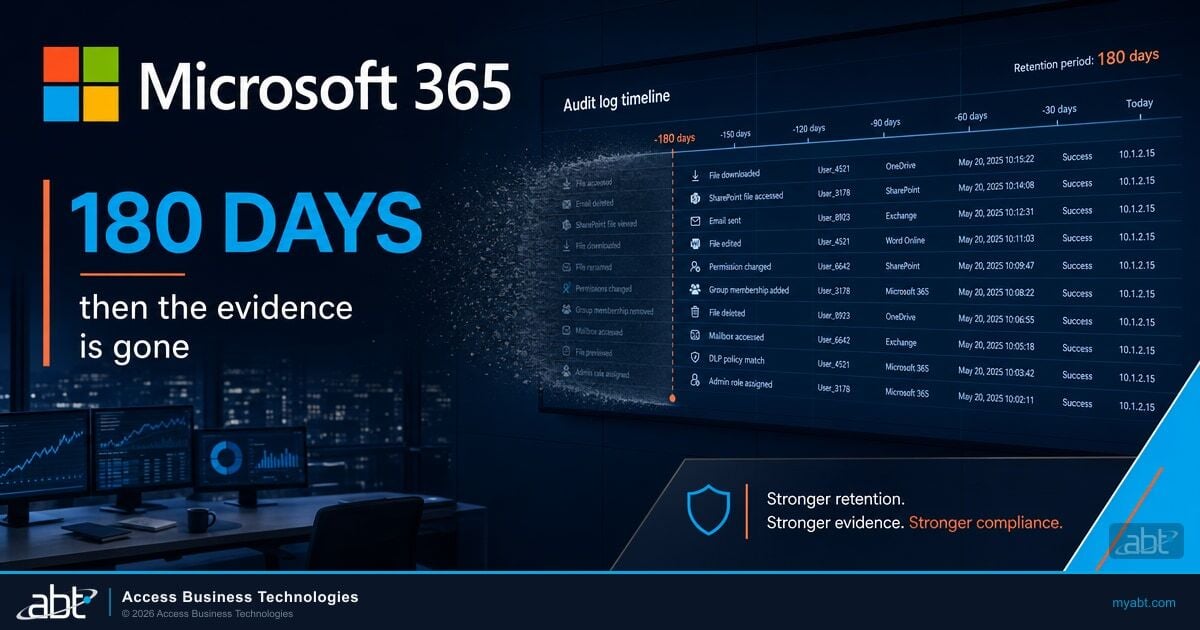
- Audit trail automation: Every action, decision, and data change is logged automatically. When external auditors or examiners need to trace a decision, the system provides the complete chain of evidence. Microsoft Purview Audit, when configured for the lending environment, retains the activity logs for the periods examiners expect to see.
- Fraud detection: Machine learning models analyze document authenticity, income consistency, and identity. Cotality's Q4 2025 Mortgage Application Fraud Risk Index reports that one in 118 mortgage applications now carries fraud indicators, with income misrepresentation accounting for 46 percent of Fannie Mae fraud cases through 2024. Investment property and multi-unit lending shows fraud indicators on roughly one in 27 applications, a much higher rate than primary-residence lending.
For banks, credit unions, and mortgage companies, the compliance layer is where a fragmented technology stack creates the most risk. When systems do not share data, disclosure timing gaps appear. When document verification lives in a separate system, audit trails have blind spots. An integrated compliance layer prevents these gaps and produces the kind of evidence package that FFIEC IT examination readiness requires on demand.

Secondary Market, Loan Participations, and Portfolio Disposition
The final layer of the ecosystem is where loans leave the originating institution. For mortgage companies, this means delivery to GSEs and investors. For community banks, it includes secondary market delivery, warehouse line management, and portfolio retention decisions. For credit unions, it covers loan participations through CUSO networks and portfolio retention on the balance sheet. The technology requirements differ but the integration challenge is the same: the upstream layers need to produce data and documents that the downstream investor, participant, or portfolio system can consume without manual rework.
Digital transformation is changing this layer rapidly. eClosing and eNotarization platforms handle document execution electronically. eVault systems store and manage authoritative copies of electronic promissory notes. API connections between originators and investors enable electronic loan delivery that replaces overnight packages with real-time data exchange. Loan-participation networks for credit unions are moving to API-based exchange of loan-level data so a participating credit union can evaluate a deal without a phone call and a PDF.
The efficiency gains cascade backward through the ecosystem. When the disposition layer is digital, every upstream process has a reason to be digital too. Paper documents at any stage create friction at the delivery stage. This is why lenders investing in front-end automation without addressing investor and portfolio connectivity see diminishing returns. The mix is also shifting: cash-out refinancing dropped to 34.8 percent of total refinances in December 2025 according to the FHFA Q4 2025 report, down from peaks above 80 percent earlier in the rate cycle. As the refi mix moves back toward rate-and-term in 2026, the document, disclosure, and delivery profile of the pipeline changes too. Lenders whose systems were tuned for cash-out volume now need to flex.
Connecting your origination workflow to your investor delivery, your participation network, or your portfolio retention decision is the kind of integration ABT designs and runs every day. Talk to an ABT lending technology specialist about mapping your stack from application to disposition.
API Architecture: The Connective Tissue of the Fintech Lending Ecosystem
APIs are what turn separate tools into an integrated ecosystem. Without them, every layer operates in isolation and generates data that has to be manually transferred to the next layer. With them, data flows from application through disposition with minimal human intervention. Banks, credit unions, and mortgage companies are moving toward composable architecture, and the institutions making that move successfully are the ones treating API governance as a first-class control rather than a vendor problem.
The composable model means connecting the strongest components in each category instead of accepting one vendor's view of the entire stack:
Pricing engine to LOS or lending platform
Real-time pricing flows into the origination workflow without rekeying or end-of-day batch jobs.
Verification provider to applicant portal
Income, asset, and identity verification populate the application as the borrower or member completes it.
Compliance engine to every layer
Disclosure timing, audit trails, and regulatory monitoring run as a parallel control plane, not a final checklist.
eClosing and eVault to investor or participation network
Loan-level data and authoritative document copies flow to the disposition channel without paper or overnight delivery.
This approach lets banks, credit unions, and mortgage companies swap individual components without rebuilding the entire stack. When a better verification provider emerges, the institution integrates it through the API layer. When regulatory requirements change, the compliance engine updates without touching the origination system. The architecture is modular by design, which is exactly the property examiners now expect to see.
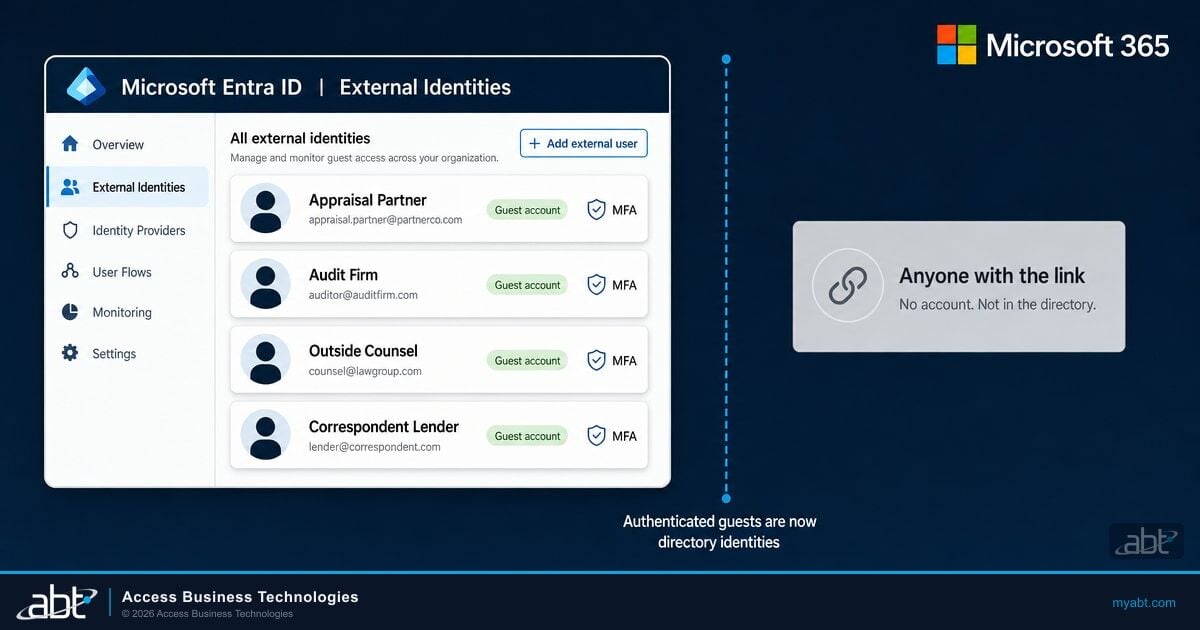
API-first lending depends on a control plane that can see every integration point. Microsoft 365 and Azure provide that plane natively for institutions that manage the rest of their environment on Microsoft. Microsoft Defender for Cloud Apps performs shadow-IT and shadow-fintech discovery, surfacing the verification providers, pricing engines, and document tools that staff have connected to the tenant. Microsoft Purview Audit retains administrative and integration activity logs at the duration examiners expect. Microsoft Entra ID Conditional Access enforces strong authentication and access controls on every fintech partner account that touches the lending environment. Microsoft Sentinel correlates anomalies across those integration endpoints so an unusual pull from a verification API surfaces as an alert, not as an audit finding six months later.
Source: Microsoft 365 and Azure security product documentation; ABT operates more than 750 financial-services Microsoft tenants and configures these controls as part of standard onboarding.
What examiners now expect on third-party fintech
The June 2023 Interagency Guidance on Third-Party Relationships from the Federal Reserve, FDIC, and OCC consolidated bank third-party risk management into a single lifecycle expectation: inventory, due diligence, contracting, ongoing monitoring, and termination. NCUA's 2026 Supervisory Priorities reinforce the same expectation for credit unions. NYDFS issued additional Third-Party Service Provider guidance in October 2025 specifically addressing AI vendors and providers handling nonpublic information. Banks, credit unions, and mortgage companies that bolt fintech APIs onto a core or LOS without that lifecycle in place are giving examiners a finding waiting to happen.
Technical Reference
- API-first (composable) architecture: System design where separate best-of-breed tools connect through standardized programming interfaces, enabling modular assembly and real-time data exchange across mortgage, bank, and credit union lending stacks.
- LOS (Loan Origination System): Central platform managing the loan lifecycle from application through closing. Mortgage examples: Encompass, MeridianLink, Calyx Path. Bank and credit union analogues: Jack Henry LoanVantage, Optimal Blue, Q2 Cloud Lending, Origence.
- AUS (Automated Underwriting System): Algorithmic engines evaluating borrower risk profiles. Mortgage examples: Fannie Mae's Desktop Underwriter and Freddie Mac's Loan Product Advisor. Bank and credit union lending platforms now embed comparable decisioning engines for consumer and small-business credit.
- eClosing and eNotarization: Electronic execution of closing documents and notarization, replacing wet signatures and physical document delivery for mortgage and increasingly for commercial and member-business lending.
- eVault: Secure electronic storage for authoritative copies of electronic promissory notes, required for secondary market electronic delivery and increasingly used for portfolio retention and loan-participation exchange.
- TRID (TILA-RESPA Integrated Disclosures): Federal regulations governing disclosure delivery timing and content in mortgage transactions, enforced by the CFPB.
- BSA/AML and CDD: Bank Secrecy Act, Anti-Money Laundering, and Customer Due Diligence requirements that apply to deposit account opening and lending at banks and credit unions, supervised by FinCEN, the FFIEC member agencies, and NCUA.
- Interagency Third-Party Risk Management Guidance: June 2023 framework from the Federal Reserve, FDIC, and OCC governing how banks evaluate, contract with, and monitor fintech and other third-party providers across the relationship lifecycle.
Build the Lending Ecosystem, Not Just the Application
Banks, credit unions, and mortgage companies gaining lending market share in 2026 are the ones connecting the borrower or member experience to the back-office workflow to the investor or portfolio decision through a single integrated stack. ABT designs, governs, and operates that connection on top of Microsoft 365 and Azure for more than 750 financial institutions.
Frequently Asked Questions
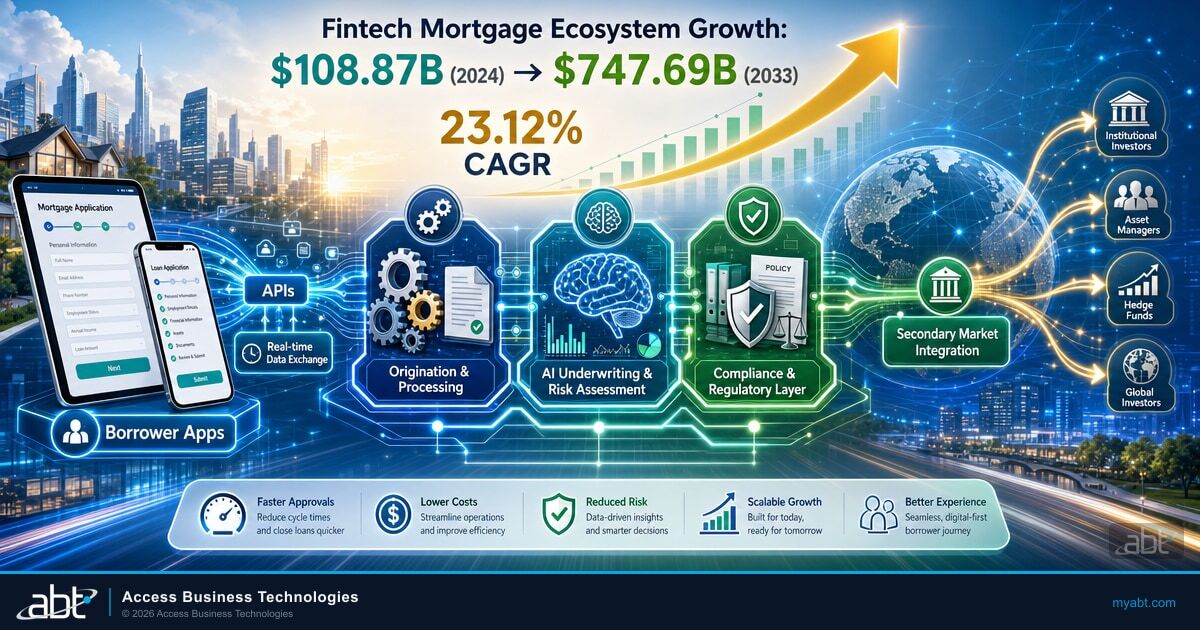
The fintech lending ecosystem has five connected layers that span banks, credit unions, and mortgage companies. The borrower or member application layer captures the request through a mobile-first portal with real-time verification. The origination, processing, and member workflow layer turns verified data into a loan file inside an LOS or lending platform. The AI underwriting layer evaluates risk and prepares the analysis. The compliance and regulatory layer runs in parallel with audit trails, disclosure management, and fraud detection. The secondary market and portfolio disposition layer handles investor delivery, loan participations, and portfolio decisions. APIs connect each layer.
API-first architecture lets financial institutions connect best-of-breed tools instead of relying on a single vendor platform. The composable approach enables faster innovation because individual components can be swapped without rebuilding the stack. Pricing engines, verification providers, compliance engines, and eClosing platforms all connect through APIs and exchange data in real time. The model supports the modular control evidence examiners now expect, since each integration has its own access policy, audit trail, and monitoring path through the institution's identity and security platform.
Mortgage-lender AI adoption jumped from 15 percent in 2023 to 38 percent in 2024 according to Stratmor Group. McKinsey's 2024 Global Banking Annual Review found that 60 percent of financial institutions are now reporting measurable cost or productivity gains from AI deployments. More than eight in ten credit unions plan to increase technology spending in 2026 with AI and fraud as the top priorities, per Cornerstone Advisors' 2026 What's Going On in Banking. The growth shows up across mortgage, bank consumer lending, and credit union member portals.
Compliance automation runs in parallel with every ecosystem layer, managing disclosure delivery within TRID timelines for mortgage and Regulation B for consumer lending, monitoring regulatory changes across GLBA, FTC Safeguards Rule, NYDFS Part 500, FFIEC handbook updates, NCUA letters, OCC bulletins, and CFPB guidance, maintaining automatic audit trails through tools like Microsoft Purview Audit, and detecting document fraud at the application stage. Cotality's Q4 2025 data shows one in 118 mortgage applications carries fraud indicators. Integrated compliance prevents the gaps that appear when systems do not share data.
The June 2023 Interagency Guidance on Third-Party Relationships from the Federal Reserve, FDIC, and OCC governs all banking organizations' fintech and digital lending arrangements through a single lifecycle expectation: inventory, due diligence, contracting, ongoing monitoring, and termination. NCUA's 2026 Supervisory Priorities reinforce the same expectation for credit unions. NYDFS Third-Party Service Provider guidance from October 2025 raises the bar specifically for AI vendors and providers handling nonpublic information. Examiners now expect a single TPRM playbook covering every fintech integration in the lending stack.
Digital disposition creates pull-through pressure for upstream automation across mortgage, bank, and credit union lending. eClosing, eNotarization, and eVault systems enable electronic loan delivery that replaces overnight packages with real-time data exchange for mortgage. Loan-participation networks at credit unions are moving to API-based loan-level data exchange. Portfolio retention decisions at community banks rely on data flowing from origination into the core. Cash-out refinancing dropped to 34.8 percent of total refinances in December 2025 per FHFA, signaling that the document and delivery profile of the pipeline is changing and that lenders need flexibility at the disposition stage.