

In This Article
- Bay Federal Credit Union: Scale Without the Manual Drag
- The Core Problem: Disconnected Systems Create Compounding Errors
- Why Bay Federal Chose MortgageExchange
- What Changed After MortgageExchange Went Live
- The Broader Lesson for Financial Institutions
- Credit Union Post-Closing Integration as a Growth Strategy
- Frequently Asked Questions
A mortgage closes, and the celebration should begin. The member got their home. The lending team did its job. But at Bay Federal Credit Union, the real work used to start after the closing table cleared.
The lending team would begin re-keying data from the loan origination system into the core banking platform. They'd triple-check for mismatches between fields. Funding would stall while someone hunted down a discrepancy between the LOS and the wire transfer system. A single typo in a borrower's account number could cascade into a compliance flag, a delayed disbursement, and a frustrated member who was told their loan funded three days ago.
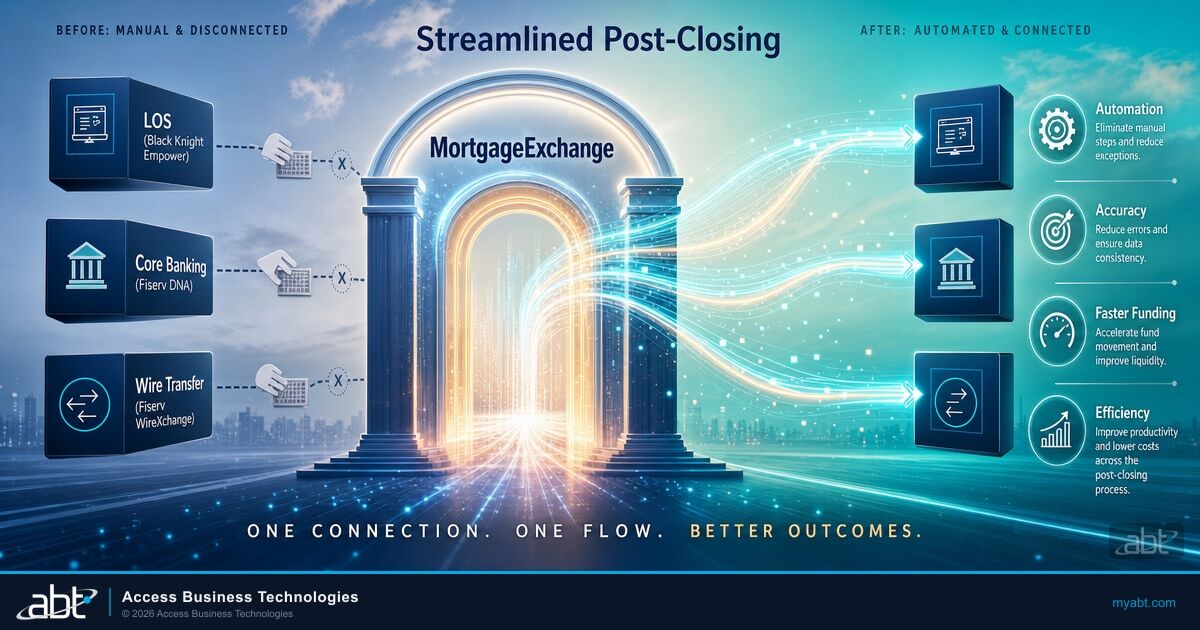
Bay Federal, based in Capitola, California, decided to solve this through post-closing integration rather than more headcount. The answer was MortgageExchange, a cloud-managed integration platform from Access Business Technologies (ABT) designed specifically for credit unions running disconnected lending systems.
Bay Federal Credit Union: Scale Without the Manual Drag
Bay Federal is the largest member-owned financial institution in the Santa Cruz, San Benito, and Monterey County region. With over 96,000 members and more than $1.8 billion in assets, it operates multiple branch locations across the Central California coast. Bay Federal has built a reputation for investing in technology that serves members well.
In 2023, Bay Federal adopted Black Knight's Empower loan origination system to modernize its mortgage lending operations. Leadership wanted to equip a lean team with better automation and faster workflows. But adopting a new LOS created a new problem: the Empower platform didn't natively connect to Bay Federal's core banking system, Fiserv DNA, or its wire transfer platform, Fiserv WireXchange.
That left the post-closing workflow exactly where it had always been: manual, fragmented, and slow.
The Core Problem: Disconnected Systems Create Compounding Errors
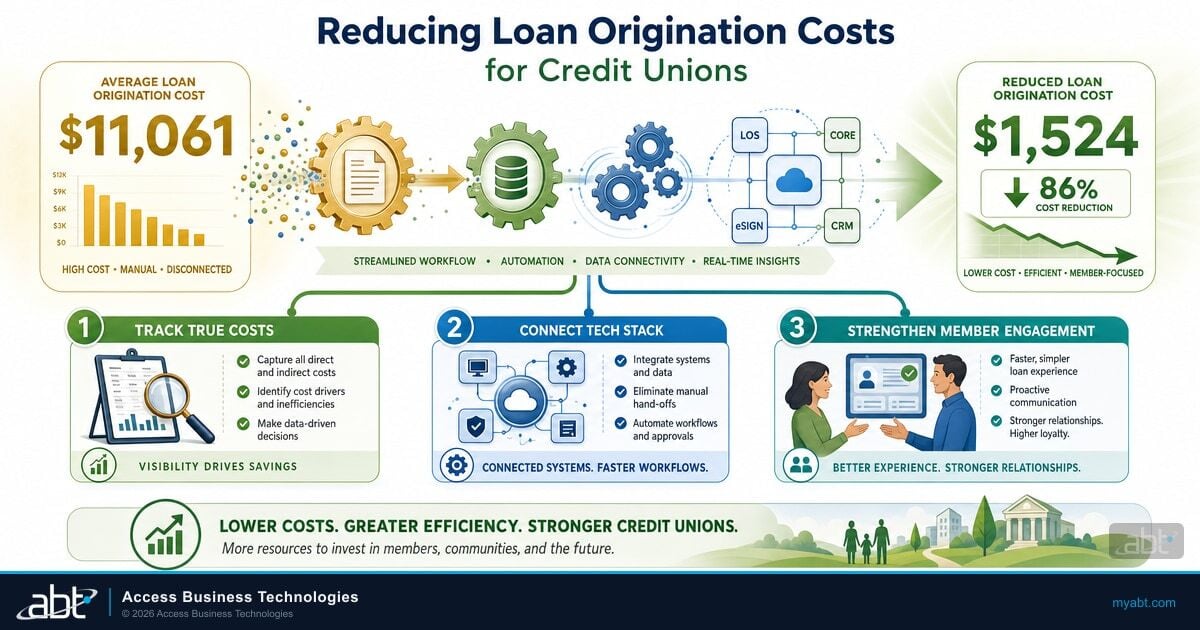
The challenge Bay Federal faced is not unique. According to industry research, up to 75% of credit unions still operate on systems that lack true end-to-end automation. When a loan origination system, core banking platform, and wire transfer system don't share data natively, every handoff between systems becomes a potential failure point.
At Bay Federal, the specific friction points looked like this:
- Dual data entry between Empower and Fiserv DNA. Every closed loan required staff to manually re-enter borrower information, loan terms, and account details from the LOS into the core. One dataset, typed twice, with two opportunities for error.
- Data mismatches that stalled loan funding. A minor discrepancy between the two systems -- a misspelled name, a transposed digit -- could delay funding until someone identified and corrected the mismatch.
- Manual wire transfer entry. Fiserv WireXchange operated independently from Empower. When a loan was ready to fund, staff had to re-enter wire instructions by hand. One wrong routing number could mean funds sent to the wrong institution.
- No real-time visibility across platforms. Because data moved between systems through manual processes, there was always a lag. Front-line staff couldn't confirm whether a loan had funded until the back office finished entering and reconciling data across all three platforms.
These aren't just operational inconveniences. For a credit union processing hundreds of mortgages per year, each manual handoff adds labor cost, extends turn times, and increases the probability of a compliance finding. The National Credit Union Administration (NCUA) expects credit unions to maintain accurate records across all systems of record. When data doesn't match between the LOS and the core, examiners ask questions.
Why Bay Federal Chose MortgageExchange
Bay Federal's leadership recognized that the answer wasn't hiring more people to type faster. The answer was removing the need to type at all.
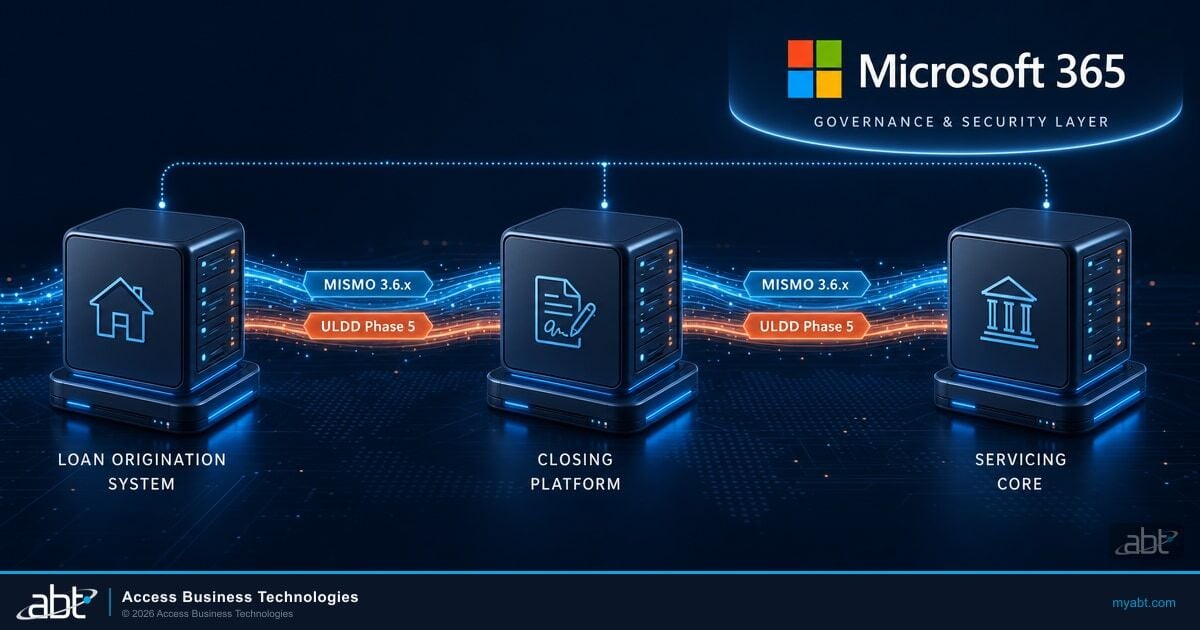
The credit union deployed MortgageExchange to connect Empower LOS directly to Fiserv DNA and Fiserv WireXchange. MortgageExchange sits between the systems and translates data in both directions according to predefined business rules. Rather than modifying either platform (which would create upgrade and support headaches), the integration layer preserves each system's independence while eliminating the manual handoffs between them.
MortgageExchange supports over 40 mortgage technology systems through pre-built connectors, including the exact combination Bay Federal runs: Empower, Fiserv DNA, and WireXchange. The platform is hosted on Microsoft Azure with encryption in transit and at rest, and ABT manages it end-to-end as part of an ongoing service.
LOS-to-Core Synchronization: Empower and Fiserv DNA
When a mortgage closes in Empower, MortgageExchange automatically extracts loan data, validates it against business rules, and writes it into Fiserv DNA. No human touches the data during this transfer. The rules engine checks for completeness -- required fields, format consistency, valid account references -- before pushing anything to the core. If something doesn't pass validation, MortgageExchange flags it for review rather than writing bad data into the core.
Both systems stay synchronized in near real-time. Loan officers can confirm funding status without calling the back office. Members get accurate information the first time they ask.
Wire Transfer Automation: Empower and WireXchange
The second MortgageExchange integration connected Empower directly to Fiserv WireXchange. When a loan is ready to fund, wire instructions flow automatically from the LOS to the wire system. MortgageExchange validates routing numbers, account numbers, and amounts before initiating the transfer.
This eliminated the highest-risk manual step in the entire post-closing process. Wire errors are expensive, time-consuming to reverse, and carry significant regulatory scrutiny. Automating this step didn't just save time -- it removed an entire category of operational risk.
What Changed After MortgageExchange Went Live
The results were visible immediately in Bay Federal's daily operations:
- Zero dual data entry. Staff stopped typing the same loan data into two systems. MortgageExchange handles the translation and transfer. This alone freed up significant back-office hours every week.
- Real-time data synchronization. Both Empower and Fiserv DNA reflect the same loan information at all times. No more waiting for batch updates. No more hunting for mismatches between systems.
- Faster loan funding. With data flowing automatically and wire transfers initiating without manual intervention, the time between closing and funding dropped substantially. Members receive their funds faster.
- Reduced post-closing cleanup. Data mismatches between the LOS and core -- which previously required manual reconciliation -- were engineered out of the process. The validation rules catch issues before they propagate.
- Accurate wire transactions. Wire instructions that used to require manual entry now flow directly from verified loan data through MortgageExchange. The error rate on wire transfers dropped to near zero.
- Staff redirected to higher-value work. The hours previously spent on data entry and error correction are now spent on member advisory services, loan processing, and business development.
The Broader Lesson for Financial Institutions
Bay Federal's experience illustrates a pattern that applies across the financial services industry. Credit unions, community banks, mortgage companies -- any institution running multiple systems that don't talk to each other faces the same economics. Lafayette Federal Credit Union's Corelation Keystone and Calyx Path integration tells the same story with a different LOS and core combination, as does One Nevada Credit Union's seamless mortgage experience across its servicing stack. The underlying mechanics are identical: disconnected systems, manual re-entry, and a credit union that decided to engineer the gap out of the workflow rather than absorb the cost of it.
Manual re-entry costs labor hours, introduces errors, extends turn times, and creates compliance exposure. MortgageExchange eliminates all four problems with a single architectural decision.
For institutions considering this approach, there are a few principles worth noting:
- MortgageExchange preserves existing investments. Bay Federal didn't replace Empower, Fiserv DNA, or WireXchange. MortgageExchange sits between them, which means each platform can be upgraded independently without breaking the integration.
- Rules-based validation catches errors before they propagate. Unlike a simple file transfer or batch sync, MortgageExchange validates data against business logic before writing it to the receiving system. This is the difference between connected systems and intelligently connected systems.
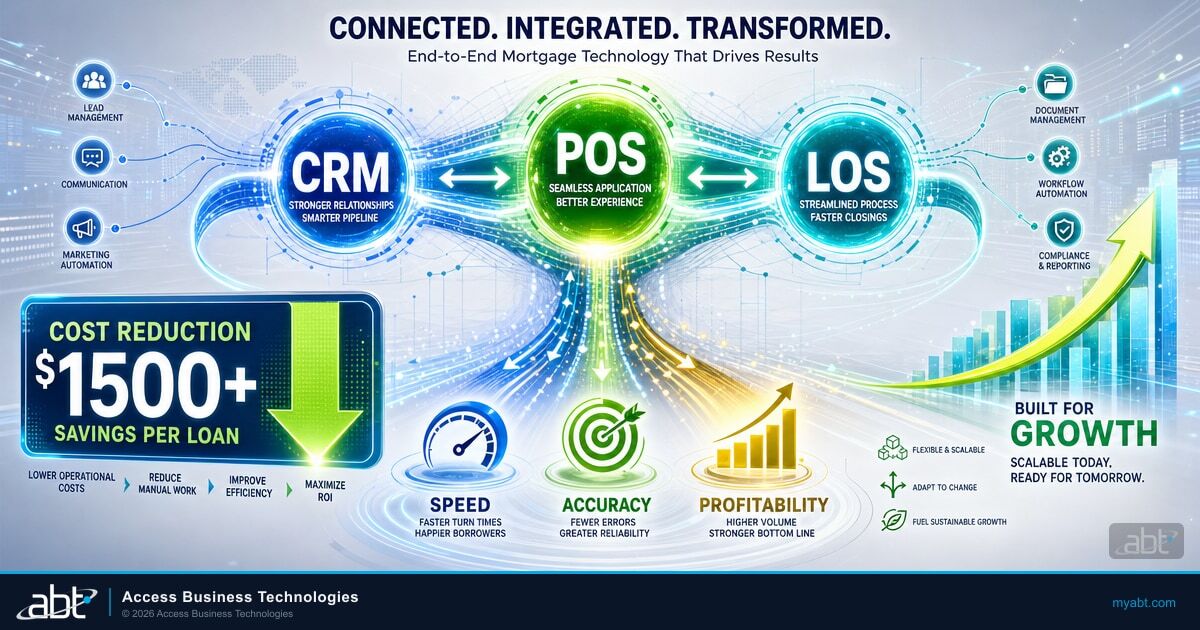
- The ROI compounds over time. Every new loan that flows through MortgageExchange avoids the labor cost and error risk of manual entry. As volume grows, the savings grow proportionally without adding headcount.
- Regulatory alignment improves automatically. When the LOS and core always agree, NCUA examinations (for credit unions), FFIEC audits (for banks), and state regulatory reviews (for mortgage companies) go smoother. Consistent data across systems is table stakes for compliance.
Credit Union Post-Closing Integration as a Growth Strategy
For Bay Federal, post-closing integration through MortgageExchange wasn't just an IT project. It was a growth enabler. With automated data flow, the credit union can scale its mortgage volume without proportionally scaling its back-office staff. Loan officers and processors spend their time on what actually matters -- guiding members through the lending process, not fixing data entry errors after the fact.
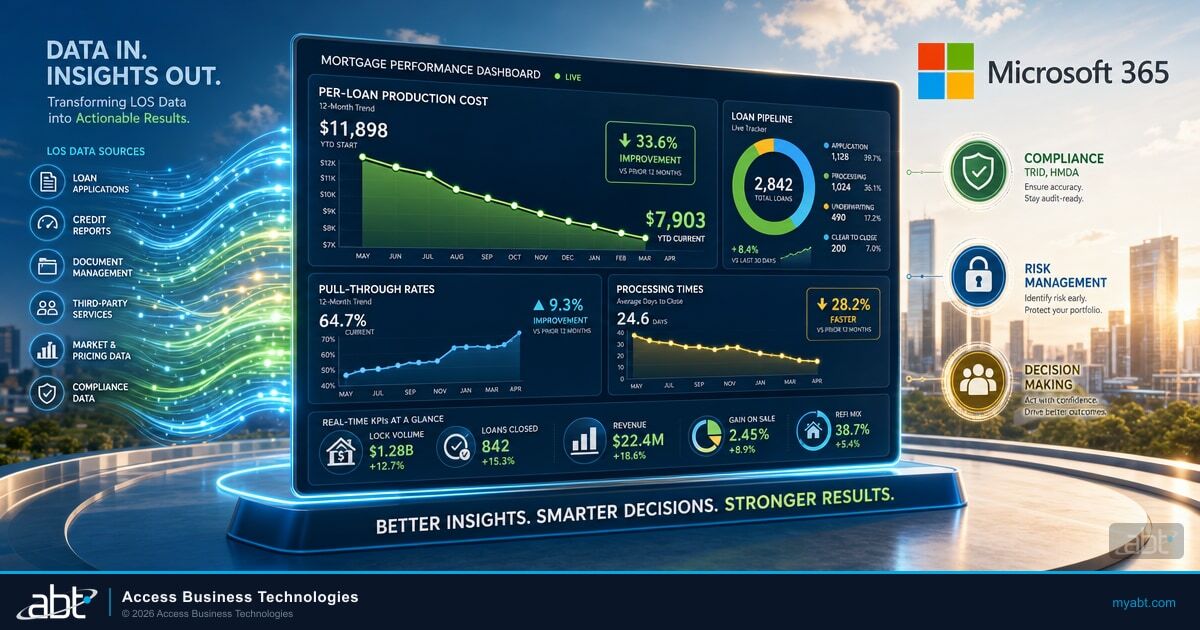
The competitive advantage is real. In a market where borrowers expect fast closings and immediate confirmation, a credit union that can fund a loan and update all systems within hours of closing has a meaningful edge over one that takes days to reconcile data across disconnected platforms. The same logic extends to tracking the mortgage pipeline across integrated systems: when every stage of the workflow shares the same data in real time, leadership stops managing by spreadsheet and starts managing by dashboard.
Bay Federal's investment in MortgageExchange now pays dividends on every loan. Faster funding, fewer errors, lower compliance risk, and a staff that actually enjoys coming to work because they're solving problems for members instead of typing the same data into three systems.
MortgageExchange sits inside the broader M365 Guardian operating model that ABT runs for the 750+ financial institutions on its Tier-1 Microsoft CSP footprint. Guardian is how ABT manages the Microsoft 365 tenant, hosts the Azure environment that runs MortgageExchange, and operates the integration layer that connects Empower, Fiserv DNA, and WireXchange as one managed service. The credit union keeps its Microsoft 365 licensing and retains its tenant ownership. The Guardian layer is added through the partner relationship.
ABT serves 750+ financial institutions as a cloud-first MSP and Tier-1 Microsoft CSP. MortgageExchange supports over 40 mortgage technology systems and is managed end-to-end by ABT on Microsoft Azure.
See What MortgageExchange Could Do for Your Credit Union
ABT runs the same MortgageExchange integration pattern Bay Federal uses for credit unions across the country. A 30-minute conversation maps your current LOS, core, and wire system footprint, surfaces the manual handoffs your team is still typing through, and outlines how a managed MortgageExchange deployment would connect them. No commitment, no quote, no obligation.

Frequently Asked Questions
MortgageExchange connects the loan origination system, core banking platform, and wire transfer system so data flows automatically after a mortgage closes. When a loan closes in the LOS, MortgageExchange extracts the record, validates it against business rules, and posts it to the core and wire system without manual re-entry. This eliminates dual data entry, reduces errors, and speeds up funding.
MortgageExchange supports over 40 mortgage technology systems, including loan origination platforms like Encompass, Empower, and Calyx Point, core banking systems like Fiserv DNA, Jack Henry Symitar, and Corelation KeyStone, wire transfer systems like Fiserv WireXchange, and servicing platforms. The platform connects these systems through pre-built connectors with configurable validation rules.
Wire transfers carry significant financial and regulatory risk because errors are costly to reverse and attract examiner scrutiny. MortgageExchange validates routing numbers, account details, and amounts before initiating transfers. This automation removes manual entry from the highest-risk step in the post-closing process, reducing wire errors to near zero while creating a complete audit trail.
MortgageExchange ensures consistent records across all connected platforms by automating data flow with validation rules. When the LOS and core banking system always agree on loan details, examiners find fewer discrepancies during NCUA examinations and FFIEC audits. The platform also creates detailed audit trails documenting every data transfer, validation check, and timestamp.
Yes. MortgageExchange sits between existing systems rather than replacing them. Each platform -- the LOS, core banking system, wire transfer system, and servicing software -- continues to operate independently. MortgageExchange handles translation and data routing between them, which means each system can be upgraded by its vendor without breaking the integration layer.