


Microsoft is putting a price on monthly billing. Your renewal date decides what it costs you.
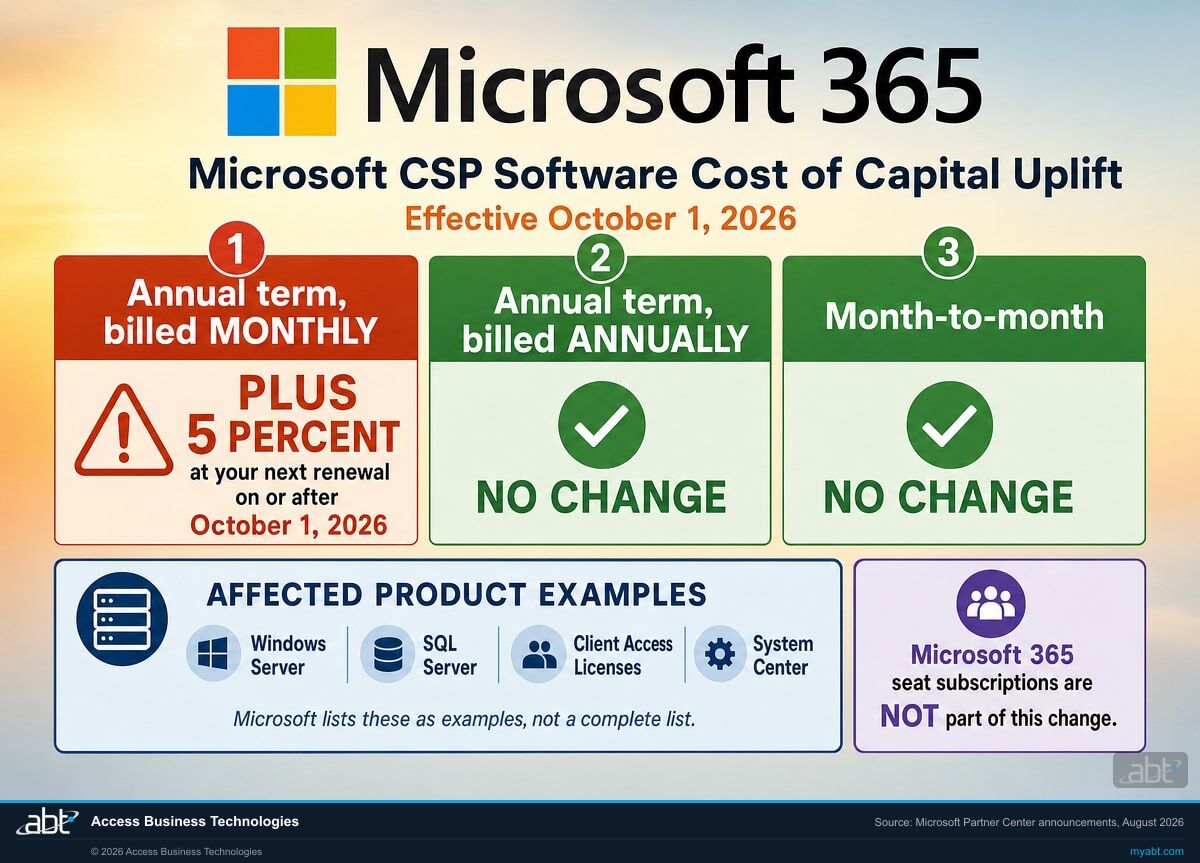
Starting October 1, 2026, Microsoft applies a 5% cost of capital uplift to CSP software subscriptions that carry an annual-term commitment but are billed monthly. Annual billing is untouched. Month-to-month is untouched. This is the rare Microsoft pricing change where you actually hold a lever, and pulling it is a finance decision more than a technology one.
- The trigger is your renewal on or after October 1, not October 1 itself
- Subscriptions billed annually or month-to-month see no change at all
- Microsoft 365 seat subscriptions are not part of this change
What actually changes on October 1, 2026?
"Starting October 1, 2026, Microsoft applies a 5% cost of capital uplift for Cloud Solution Provider (CSP) software subscriptions (such as SQL Server, Windows Server, Client Access Licenses, and System Center) with annual-term commitments billed monthly."
Three conditions have to be true at once before this touches a subscription: it is CSP software, it carries an annual-term commitment, and it is billed monthly. Miss any one of them and nothing changes. That is a narrower net than most pricing announcements cast, and it is why the first useful thing to do is not to budget for an increase but to go find out which of your subscriptions actually qualify.
Microsoft is explicit that the alternatives are unaffected. In the same announcement: "There's no change to annual billing or month-to-month subscriptions." The company frames the reasoning as consistency across how it sells, saying the update "aligns pricing treatment across sales channels while preserving monthly billing flexibility for customers." Read plainly, monthly billing is not going away. It is being priced.
One detail in the wording carries more weight than its size suggests. The product list reads "such as" SQL Server, Windows Server, Client Access Licenses, and System Center. Those are examples, not a closed list. If you run a CSP software subscription that is not one of those four, its absence from that sentence is not evidence that it is exempt. Check the subscription, not the example list.
There is also a correction sitting in the announcement worth knowing about. Microsoft published this under a heading labeled Correction: "An earlier communication about this pricing update included an incorrect effective date. The correct effective date is October 1, 2026." Microsoft does not say what the earlier date was, so we will not guess. What it means practically is that if someone already told you a different date for this change, October 1, 2026 is the one to plan against.
Which of my subscriptions does this touch?
The uplift keys off the shape of the subscription, not the product name. Find the shape and you have your answer.
| Subscription shape | What changes | When you feel it |
|---|---|---|
| CSP software, annual term, billed monthly | 5% cost of capital uplift | At your first renewal on or after October 1, 2026 |
| CSP software, annual term, billed annually | No change | Never, under this announcement |
| CSP software, month-to-month | No change | Never, under this announcement |
| Microsoft 365 seat subscriptions | Not in scope | This announcement covers software subscriptions, not seats |
| Azure consumption | Not in scope | Consumption is not a term-commitment software subscription |
The fourth row is the one that prevents the most wasted worry. Plenty of people will read a headline about a Microsoft price increase and assume it lands on their Microsoft 365 bill. This one does not. It is aimed at the server software estate: the Windows Server licenses under your core systems, the SQL Server instances behind your reporting, the Client Access Licenses nobody enjoys counting, and System Center if you still run it.
For credit unions, banks, and mortgage companies, that estate is usually larger than the seat count suggests. Core banking, loan origination, document imaging, and reporting all tend to sit on Windows Server and SQL Server, and the CAL math scales with staff. A 5% uplift on a modest seat bill is noise. On a server estate carrying a decade of accumulated systems, it is a line item somebody will ask about.
Do you know your renewal dates without looking?
Almost nobody does. ABT builds the list with you: the subscriptions we already hold for you we pull directly, and for anything licensed elsewhere we work from what you can export. Then we tell you which ones the October 1 uplift actually reaches. Free, in writing, no commitment.
Should I switch to annual billing to avoid it?
Maybe. This is a cash flow question wearing a licensing costume, and the honest answer depends on numbers only your finance team has.
Switching an annual-term subscription from monthly to annual billing avoids the uplift. It also means paying twelve months up front instead of spreading the cost. That is not free. It is a different cost, paid in working capital rather than in a percentage, and for some institutions it is the more expensive of the two.
The arithmetic deserves a real calculation rather than a glance. The uplift is charged on the subscription. The cost of avoiding it is committing cash sooner. Those two are not directly comparable until you account for timing, because monthly billing would have spread those same payments across the year, so prepaying does not tie up the full annual sum for the full year. The effect of that is worth stating plainly: the return on prepaying is better than the 5% headline makes it sound, which tips the comparison toward annual billing more than a quick look would suggest. Your finance team can settle it properly in an afternoon using your real renewal amounts and your real cost of capital, and it is their call to make rather than a licensing default.
What makes this worth a real conversation rather than a default is that most organizations landed on monthly billing years ago for reasons nobody has revisited since. The original reason may still hold. It may also be a habit from a budget cycle that no longer exists.
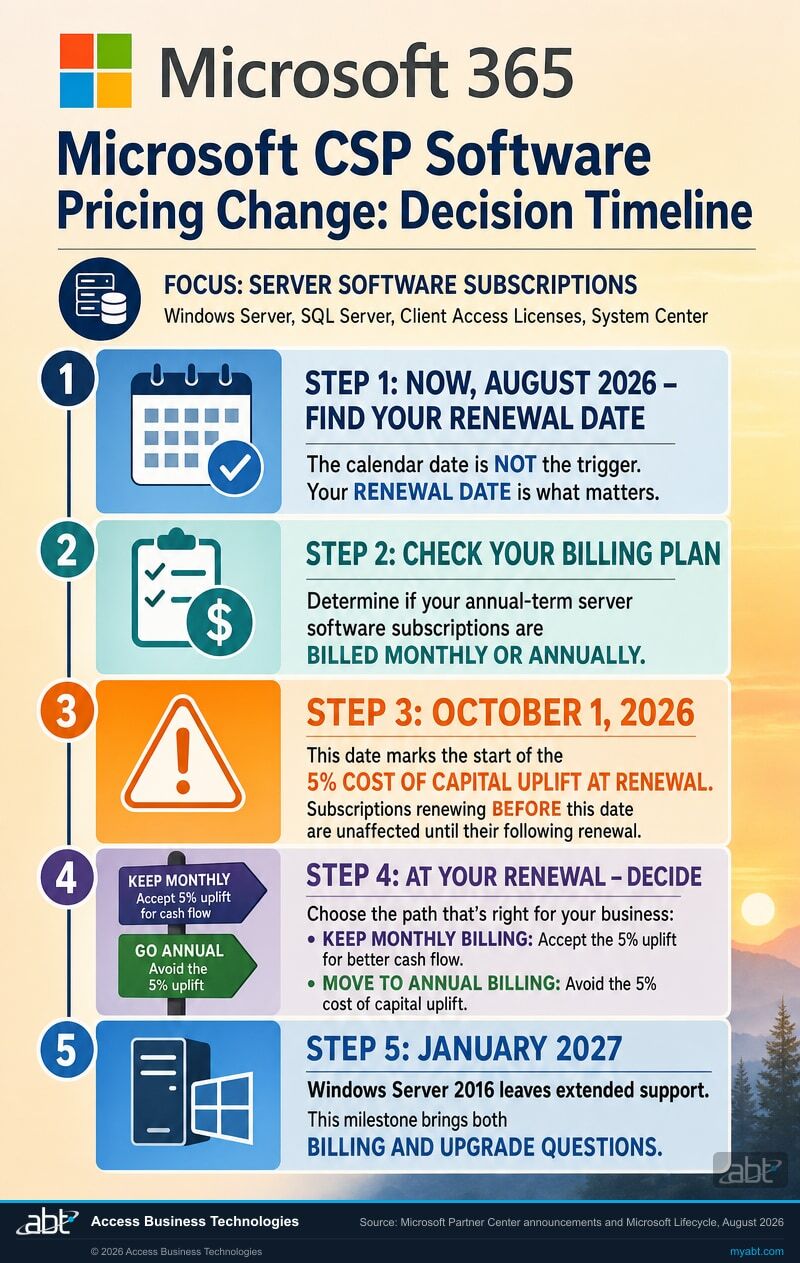
One practical note: renewal is the moment the uplift attaches, which makes renewal the natural decision point. Whether a billing plan can also be changed part-way through a term varies by subscription, so confirm that for yours rather than assuming it either way. Either way, the date driving this is your own renewal, and it is different for every subscription you hold.
Find your renewal dates
Not the October date. Yours. Every annual-term software subscription has its own renewal anniversary, and that anniversary is what decides whether this reaches you in October, next spring, or next summer.
Check the billing plan on each one
Annual term billed monthly is the only combination in scope. This is a field on the subscription, and plenty of organizations have a mix they did not deliberately choose.
The uplift starts applying at renewal
Subscriptions that renew before this date carry on unchanged until their following renewal. Nothing in this announcement takes effect mid-term.
Make the call, subscription by subscription
Keep monthly billing and accept the uplift where cash flow matters more, or move to annual billing where it does not. There is no reason the answer has to be the same for every subscription you hold.
Windows Server 2016 leaves extended support
If any of this estate still runs Windows Server 2016, the billing question and the upgrade question arrive within a few months of each other. Deciding them together is cheaper than deciding them twice.
What this page is careful not to claim
Four places where a reasonable reading of the announcement would take you somewhere wrong.
The product list is examples, not a boundary
Microsoft writes "such as" before naming SQL Server, Windows Server, Client Access Licenses, and System Center. A CSP software subscription outside those four is not automatically exempt. We check the subscription itself rather than reasoning from the example list.
Nothing changes mid-term
The uplift applies at renewal on or after October 1, 2026. A subscription in the middle of its term on that date carries on at its current price until the term ends. October 1 is when the rule starts, not when everyone's bill moves.
Worth knowing: Microsoft spells out that renewal timing for existing subscriptions specifically. It does not spell out how a brand new annual-term subscription bought after October 1 is treated, so if you are purchasing rather than renewing, confirm that at the point of purchase instead of assuming the renewal timing covers you.
This is not a Microsoft 365 price change
The announcement covers CSP software subscriptions. Your Microsoft 365 seat licensing is a separate product line with a separate pricing history, and it is not part of this. Anyone telling you otherwise has conflated two different Microsoft announcements.
We do not know what the wrong date was
Microsoft's Correction notes that an earlier communication carried an incorrect effective date, without saying what it was. So we report the correction and the right date, and we do not speculate about who was told what.
A free licensing assessment, before your next renewal
You cannot make this decision without knowing your renewal dates and billing plans. Most organizations do not have that list. Building it is the assessment.
We build the list. You make the call.
- Your subscriptions, with their shape. Product, term length, billing plan, and renewal date, in one table. Where ABT already holds the licensing we pull it directly; where it sits with another provider we build the same table from what you can export. This is the artifact most organizations are missing, and it is useful long after October.
- Which ones the uplift reaches, and on what date. Filtered to the annual-term subscriptions billed monthly, sorted by renewal date, so you can see what needs a decision this quarter and what can wait.
- Both paths priced side by side. What monthly billing plus the uplift costs across the term against what annual billing costs up front, so your finance team can weigh the cash flow rather than guess at it.
- Right-sizing while we are in there. Assessments routinely surface Client Access Licenses counted against staff who left and server subscriptions supporting systems that were retired. Cutting those beats optimizing the billing frequency on licenses you no longer need.
- The Windows Server 2016 overlap flagged. If any of it runs on a version leaving support in January 2027, you will see that on the same page as the billing decision, because deciding those separately costs more.
The assessment is free and carries no obligation. ABT is a Tier 1 Cloud Solution Provider (CSP) serving over 750 financial institutions; we manage Microsoft 365 tenants and host Azure environments for credit unions, banks, and mortgage companies. We cannot change Microsoft's list price and we will not pretend otherwise. What we can do is make sure you are paying for what you actually run, on the billing plan you would choose if you had the numbers in front of you.
ABT also operates M365 Guardian, its managed security service for credit unions, banks, and mortgage companies.
Related reading
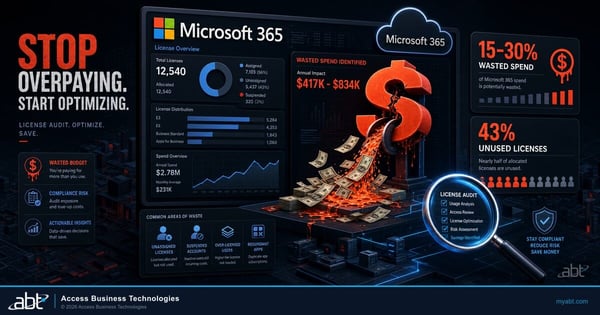
Microsoft 365 License Audit: Are You Overpaying?
The seat-side version of the same discipline: find what you are paying for, confirm somebody still uses it, then decide.
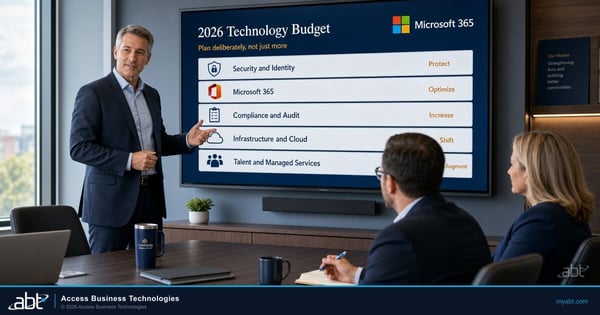
Community Bank IT Budget Planning for 2026
Where the money goes across a typical community bank technology budget, and how to defend the allocation.
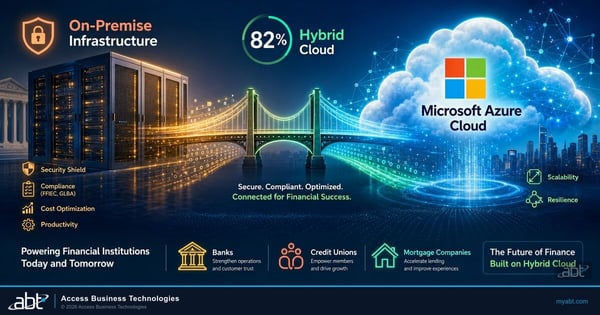
Hybrid Cloud for Financial Institutions
Which workloads genuinely belong on Windows Server, and which have quietly outgrown the reason they were put there.
The October 1 change, answered
Find out before
your renewal does.
Tell us roughly what you run on Windows Server and SQL Server. ABT will map your server software subscriptions, their billing plans, and their renewal dates, then show you which ones the October 1 uplift reaches. Free, in writing, within one business day.
