This page will not tell you it is. That answer lives in your own retention schedule. What is worth noticing is that Microsoft raises the subject unprompted.
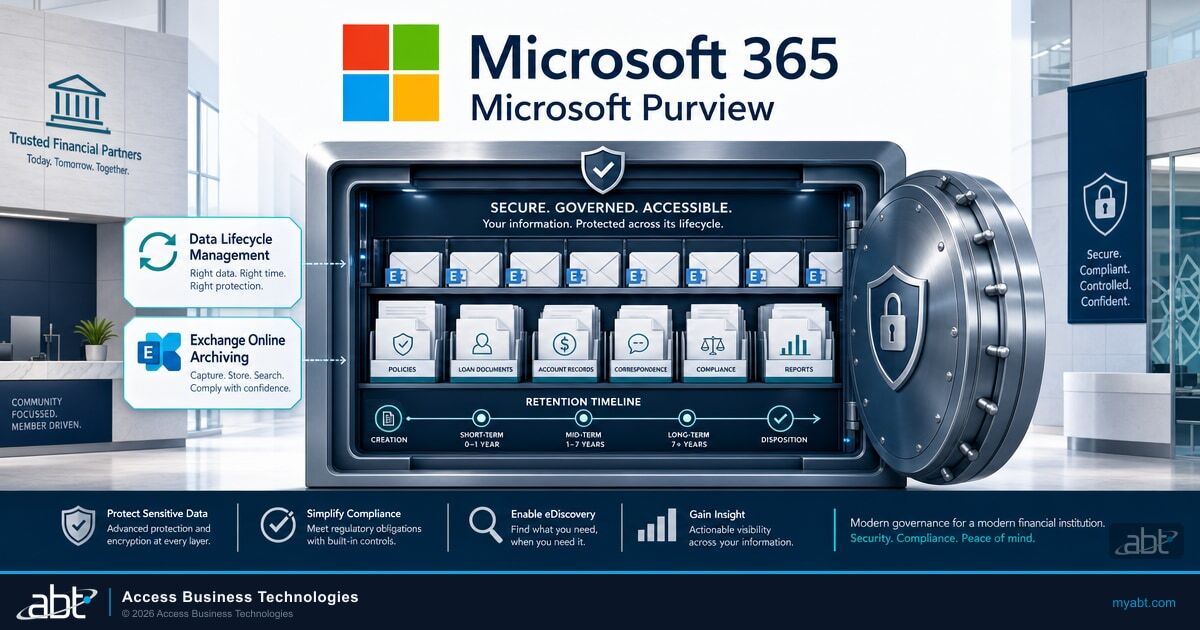
In explaining why the old storage had to go, Microsoft lists what OneDrive adds: "Moving these files to OneDrive improves security, accessibility, revision history, eDiscovery, and access to current and future Whiteboard features." The benefits section repeats it under a heading called Enhanced security and compliance, naming improved security controls, revision history, and eDiscovery support.
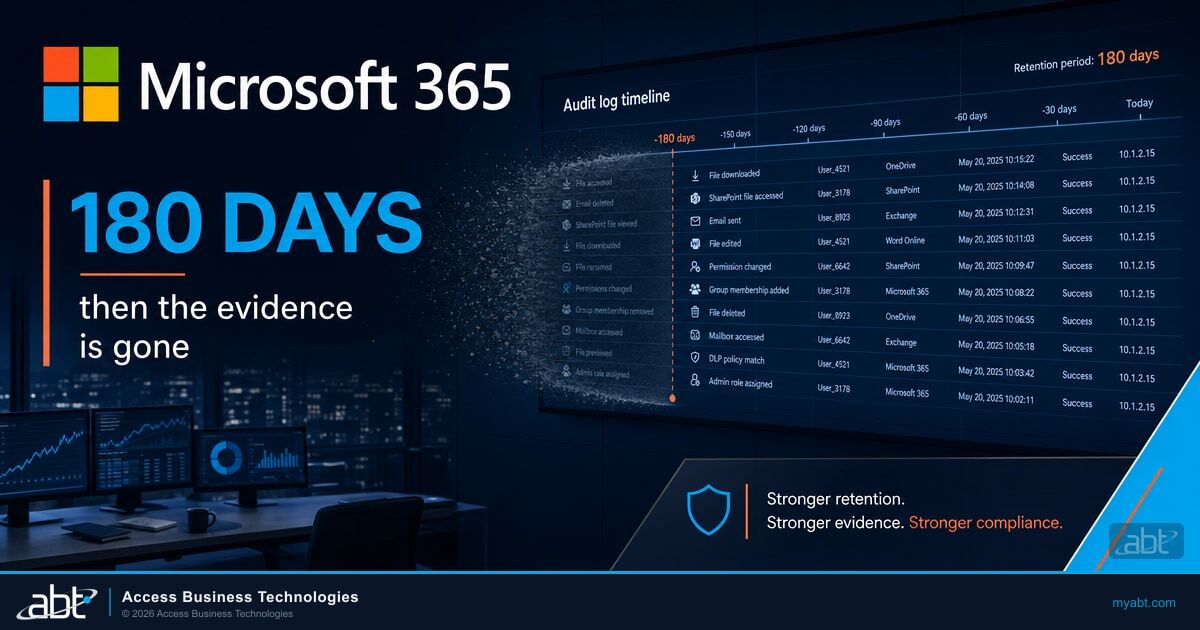
Microsoft is more explicit elsewhere. Its comparison page states plainly that Azure whiteboards do not offer a list of features that includes retention policies, e-discovery and data loss prevention, a recycle bin, last edited information, Office.com search, and local data residency. That is not an inference drawn from a benefits blurb. It is Microsoft listing retention policies and e-discovery among the capabilities the legacy boards do not offer. If your institution has ever answered a discovery request, an examination request, or an internal investigation by searching Microsoft 365, that is a coverage gap worth understanding before the content disappears.
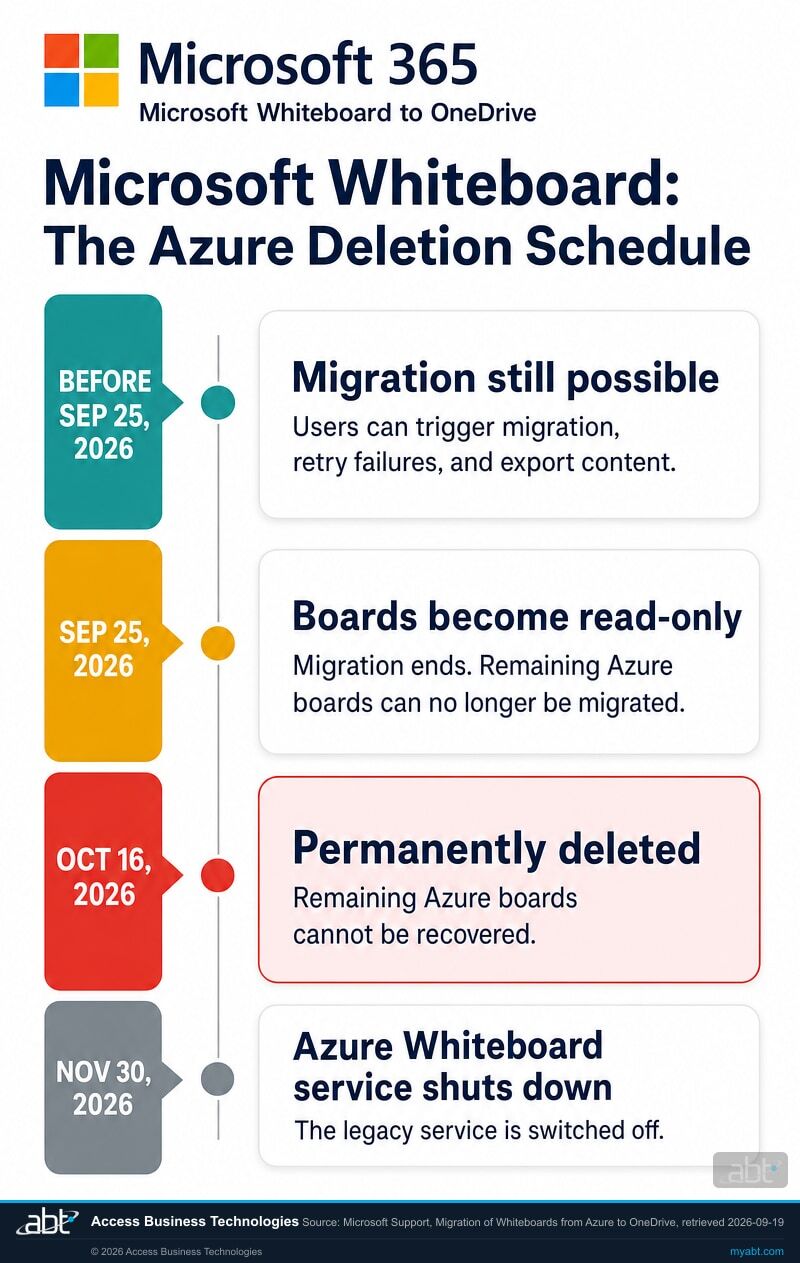
That is a governance question with a deadline attached. Boards that migrate land in OneDrive, where Microsoft Purview eDiscovery and retention policies can reach them. Whether your existing policies actually cover them is a separate question that turns on scope, licensing and configuration, and it is worth checking rather than assuming. Boards that do not migrate can still be exported by hand until October 16, and whatever is neither migrated nor exported by then stops existing. The one thing that will not happen is the boards staying where they are.
So the useful version of the question is narrower and answerable in an afternoon: did anything happen on those boards that your retention schedule would have covered had it happened in a document? Committee workshops, incident post-mortems, vendor selection sessions, and risk-ranking exercises all tend to produce a whiteboard and a set of decisions. If the decisions were written up elsewhere, the board is probably a working artifact. If the board is the write-up, it is doing the job of a record whatever it is called. Which of those applies is a call for your records and legal reviewers, not for an IT deadline.
The awkward case is the one Microsoft flags in its administrator checklist, because the boards most likely to matter are the ones least able to save themselves.
The boards owned by people who left are the ones that cannot migrate
Microsoft's instruction to administrators is plain: "Transfer boards owned by dormant or departed users to an active user so that migration can be triggered."
Migration fires when the owner opens Whiteboard. An owner who left the institution in 2023 is never going to open Whiteboard again, so their boards sit at zero progress until somebody reassigns them. Those are also, disproportionately, the boards worth keeping: longer-tenured people, older projects, and the decisions that predate the current team. Ownership transfer is the step that has to happen before September 25, because after that no amount of reassignment will help.